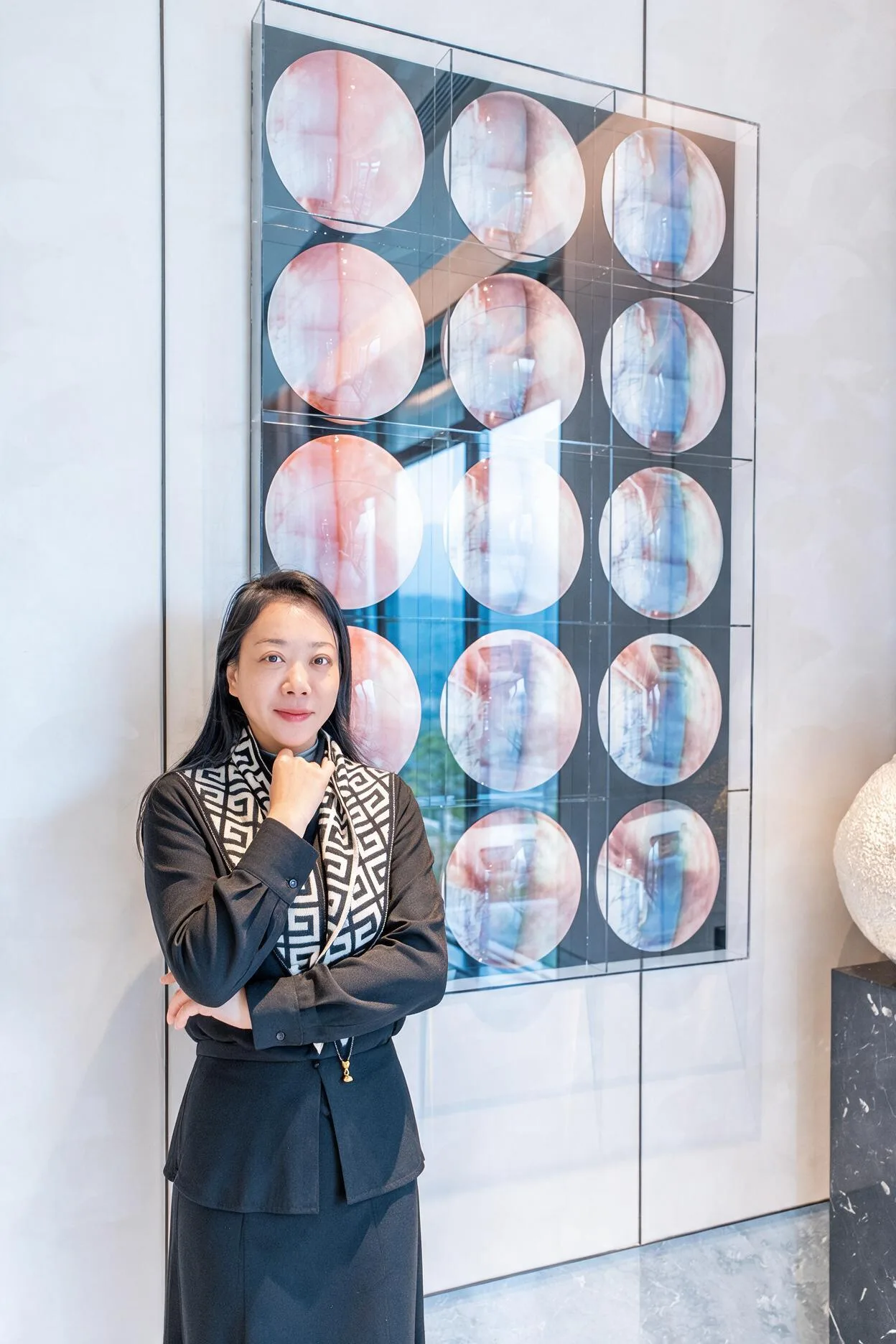
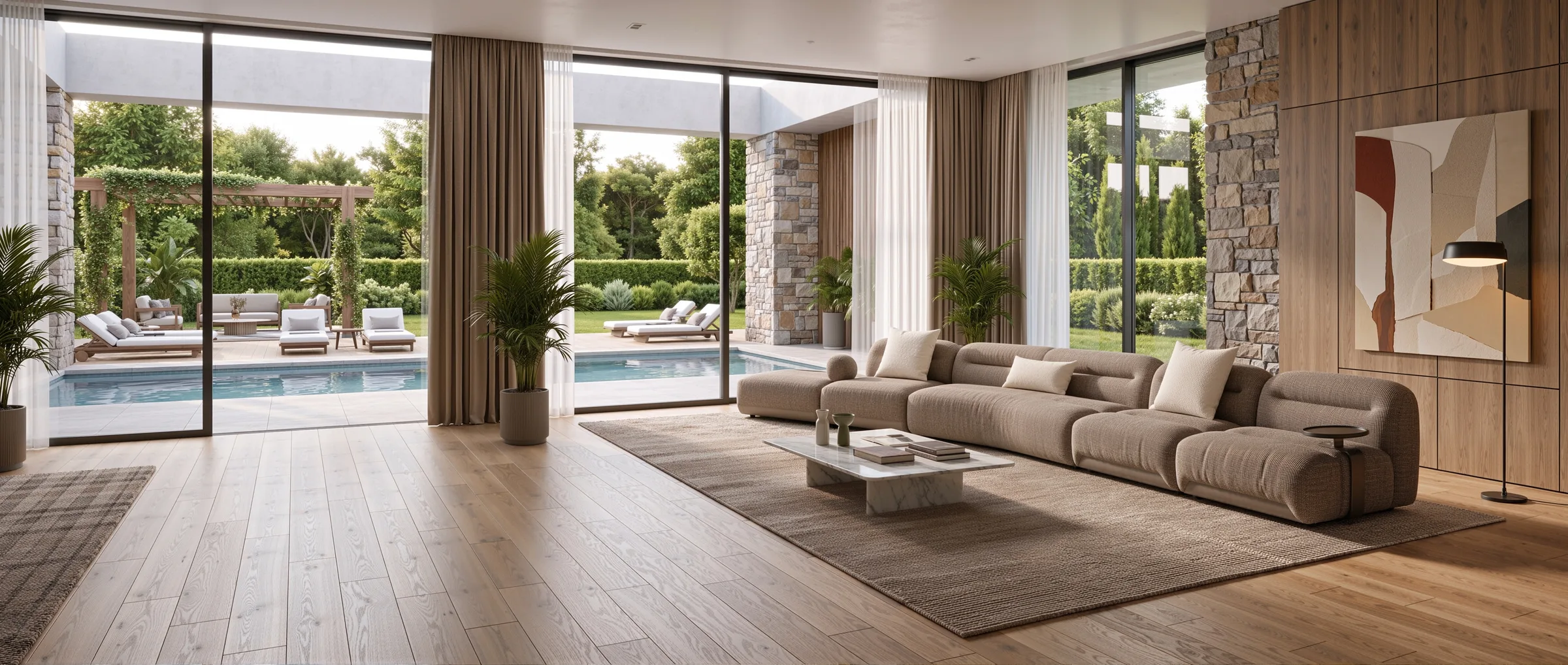
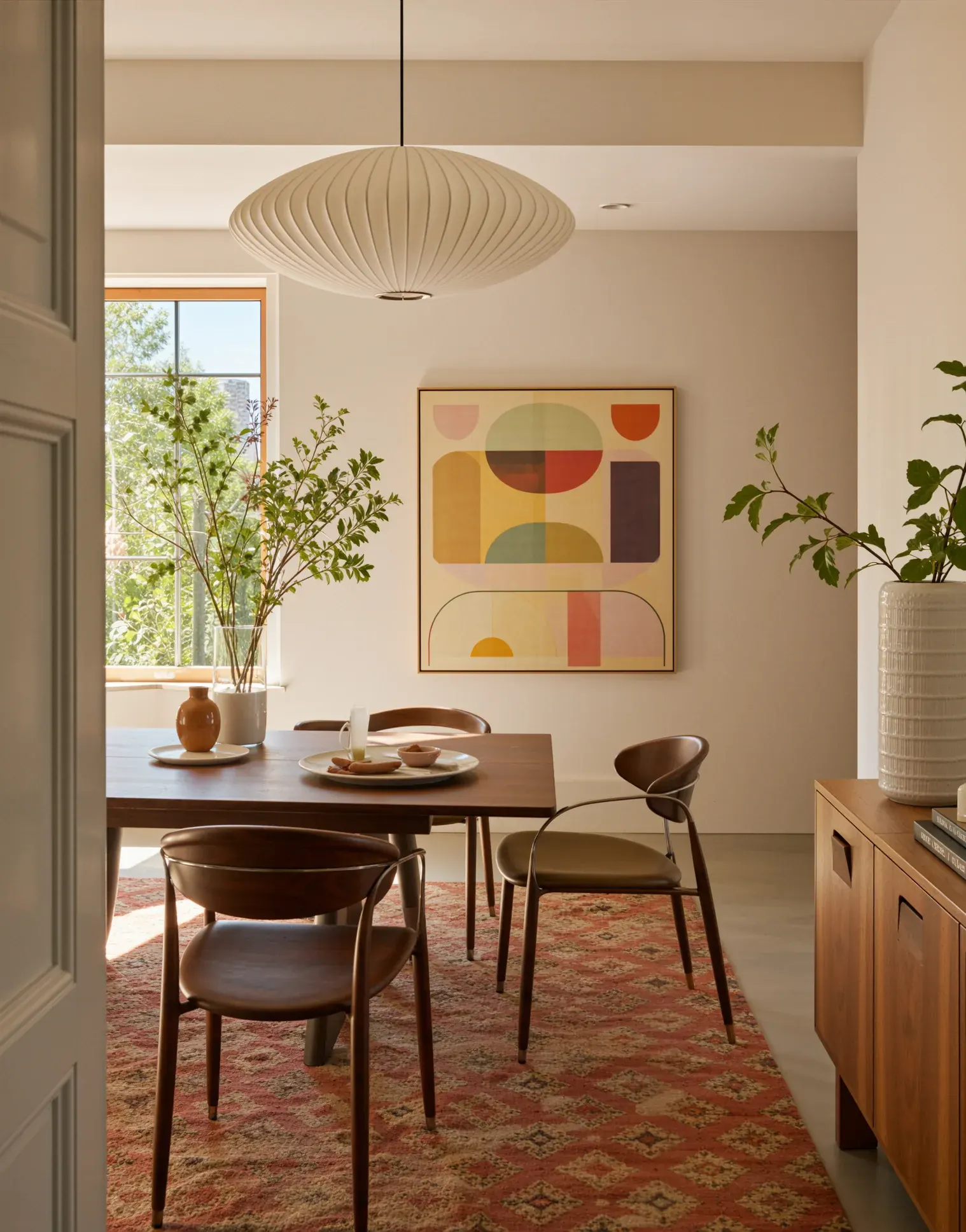
Decorative objects complete the story of a room. We connect artwork, sculpture, mirrors, rugs, lighting, textiles and greenery to the architecture and furniture scheme. Styling sits on top of the furniture schedule: the residential furnishing scope shows the sequence, and material selection decides what the room can carry.
YUESHAN can support a designer's approved concept or develop the accessories direction as part of a wider FF&E package. The scope may combine sourced pieces, custom development and final styling.
02 / Category scope
Six furnishing layers.
01
Artwork
Paintings, wall pieces and commissioned art selected by scale, palette, position and viewing distance.
02
Sculpture & objects
Tabletop objects, floor sculpture and grouped decorative pieces curated for the room narrative.
03
Mirrors
Decorative and functional mirrors developed around proportion, frame, finish, fixing and site condition.
04
Rugs & textiles
Custom or sourced rugs, cushions and soft layers coordinated with furniture, circulation and performance.
05
Decorative lighting
Feature and portable lighting coordinated with atmosphere, scale, finish and the electrical brief.
06
Greenery & planters
Plants, florals and planters selected for placement, maintenance, scale and material compatibility.
03 / Curated references
Each item shown with materials, customization and project context.
Accessories in the library are presented with their materials, customization scope and project context—not as isolated images. The reference grows as new styling directions are documented.
Confirm samples, dimensions, finishes, artwork imagery, grouping and substitution rules before ordering.
04
Plan room and placement coding
Where included, item codes and labels connect each object to its intended room, position and receiving list.
05
Direct the final composition
Where separately agreed, placement guidance or on-site styling can preserve the relationship between objects and space.
05 / Scope boundaries
Specify the level of support.
Accessories can be supplied as individual categories or coordinated as part of an FF&E package.
Core scope when appointed
Curation & supply
Category and placement schedule
Sourcing or custom-development route
Dimensions, finishes and approvals
Room and item labelling
Available by agreement
Extended support
Commissioned artwork coordination
Custom rugs, mirrors and objects
Remote placement or styling guidance
Final styling direction
Not included by default
Local responsibilities
Electrical design and local certification
Local fixing substrates and site preparation
Plant maintenance and replacement
Customs, storage and local labour
Accessories and styling items start at a minimum order value of USD 5,000. Unlike furniture, this side of a package is picked, checked, wrapped and re-packed by piece across many separate SKUs, so the handling cost per unit does not fall when the order falls. On a full FF&E package the floor rarely binds; on a styling-only refresh or a top-up order after handover it does. Furniture and custom project work carry no minimum order quantity — see the published trade terms.
Design reading · production translation · coordinated supply
What the project team should decide: Decorative Accessories & Interior Styling Supply
Custom manufacturing begins before the workshop. The team first identifies what gives the piece its character, then resolves construction, material, interfaces, sample level and repeatable production control.
Conversation
Design responsibility
Supply/production responsibility
Intent
Proportion, silhouette, touch and material hierarchy
Clarify scope, quantities, destination and feasibility questions
Development
Sections, profiles, junctions and critical visual details
Shop drawings, build-up, hardware, tolerance and maker coordination
Approval
What needs a finish sample, prototype or complete setting
Submission schedule, comments, resubmission and retained references
Delivery
How pieces relate in the finished room
Batch control, consolidation, packing sequence and site information
Bring to the review
Latest drawing or rendering, quantities, intended use, destination, material references, current quotation assumptions and unresolved comments.
Keep after the review
Approved revision, sample identity, decision limits, exceptions, responsible party and the evidence required before the next release.
What should the client send first?
Send the latest plans or renderings, schedule or BOQ, quantities, destination, programme and the decisions that remain open.
Does every project need the same approval process?
No. The route depends on design risk, repetition, material variation, destination requirements and what the project team must verify before release.
 YUESHANDECODesign-led custom furniture & FF&E delivery partner in ChinaSubmit a project ↗