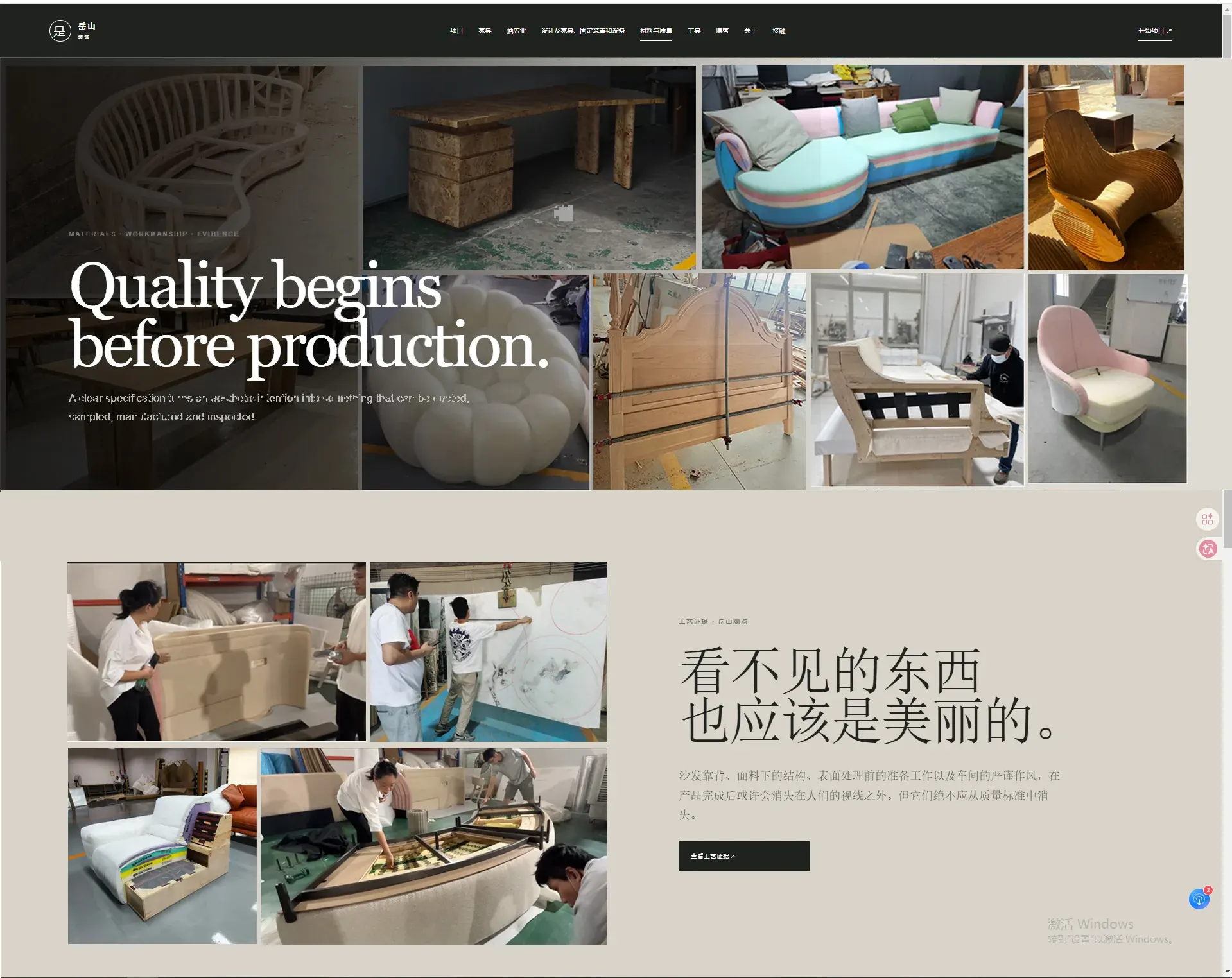
A practical framework for linking accepted drawings, materials, staged checks and packing release during custom furniture production. The inspection stages follow the QC method; the punch-list checks start before packing, not after arrival.
01Furniture consultant, engineer and quality inspector roles
02White-body and finished-product inspection stages
03Material and finish confirmation before production
04Packaging selected by product and transport risk
01
Drawing standard: define before cutting
Production information should state the project, item code, dimensions, views, sections, component positions, visible and concealed materials, surface treatments, interfaces, special fittings, tolerances and approval status.
Product identity and drawing revision
Front, side, top and detailed views
Materials, finishes and construction notes
Client confirmation and exception notes
02
Material standard: approve the real reference
Substrates, solid timber, veneers, paint systems, stone, metal, glass, foam, fabric, leather, hardware and adhesives are confirmed by specification and, where appropriate, physical samples. Natural variation and approved-equal rules are recorded before use.
03
Workmanship standard: inspect in stages
The documented workflow covers drawing release, material selection, cutting and fabrication, internal frame or white-body inspection, finish or upholstery checks, assembly, photography, corrective action and final release.
Structure, stability and dimensions
Surface preparation and finish consistency
Upholstery shape, seams and comfort
Hardware, function, alignment and exposed details
04
Packing standard: protect by risk
Upholstery, assembled timber furniture, glass, marble, sintered stone and oversized pieces require different layers of protection. Carton, foam, woven wrap, timber frame or full crate is selected around fragility, weight, geometry and transport distance.
05
Three project roles with clear ownership
A project lead connects the client's requirements to production; a furniture engineer develops structure and process information; and a quality inspector checks materials and workmanship at agreed milestones. The role names may vary, but the responsibilities stay defined.
Before you appoint a delivery partner.
Do you have ISO or EN furniture quality certification?
Our 2025 company profile documents internal drawing, material, workmanship and packing requirements. It is not an ISO certificate or an EN product test report. For a requirement in your project, confirm the applicable product, current certificate or report, issuing body and scope before making a compliance claim.
How can furniture quality be checked before shipping?
The agreed inspection plan can run from drawing release and material confirmation through selected white-body, finish, upholstery, assembly and packing stages. The proposal should identify the check owner, accepted reference, records and release authority.
What materials and hardware can I specify?
Specify the substrate, timber, veneer, stone, metal, upholstery and hardware for the item and intended use. Our 2025 profile contains historical material options, not automatic approval for a new destination. Confirm the current product reference, finish, substitution rules and required documentation before ordering.
Can I visit a proposed workshop or inspect goods in person?
A workshop visit or independent inspection may be arranged after the proposed manufacturing location, production stage, access permission and inspection scope have been confirmed for the order.
How should defective items or quality complaints be handled?
The agreed process should connect an issue to the accepted reference, batch and inspection record, then state the responsible party, proposed correction, reinspection and release decision. Rework, replacement, cost and timing depend on the signed commercial terms.
Design reading · production translation · coordinated supply
What the project team should decide: Custom Furniture Manufacturing & Production Control
Custom manufacturing begins before the workshop. The team first identifies what gives the piece its character, then resolves construction, material, interfaces, sample level and repeatable production control.
Conversation
Design responsibility
Supply/production responsibility
Intent
Proportion, silhouette, touch and material hierarchy
Clarify scope, quantities, destination and feasibility questions
Development
Sections, profiles, junctions and critical visual details
Shop drawings, build-up, hardware, tolerance and maker coordination
Approval
What needs a finish sample, prototype or complete setting
Submission schedule, comments, resubmission and retained references
Delivery
How pieces relate in the finished room
Batch control, consolidation, packing sequence and site information
Bring to the review
Latest drawing or rendering, quantities, intended use, destination, material references, current quotation assumptions and unresolved comments.
Keep after the review
Approved revision, sample identity, decision limits, exceptions, responsible party and the evidence required before the next release.
What should the client send first?
Send the latest plans or renderings, schedule or BOQ, quantities, destination, programme and the decisions that remain open.
Does every project need the same approval process?
No. The route depends on design risk, repetition, material variation, destination requirements and what the project team must verify before release.
Bring the drawings. We will structure the next step.
Prepare your plans, renderings, BOQ, furniture schedule, quantities, location, packing needs and target delivery date for project review.
 YUESHANDECODesign-led custom furniture & FF&E delivery partner in ChinaSubmit a project ↗