 YUESHANDECODesign-led custom furniture & FF&E delivery partner in ChinaSubmit a project ↗
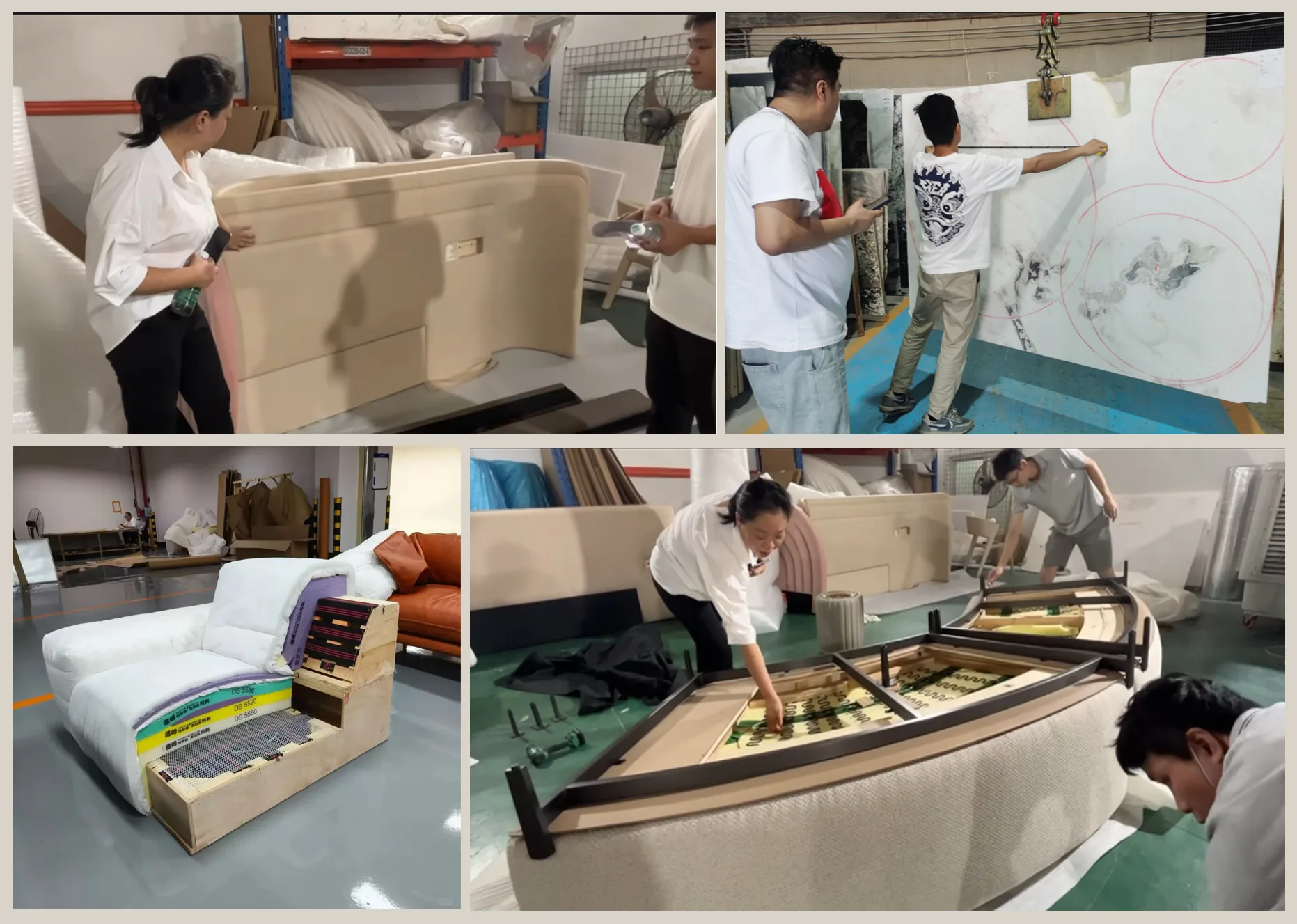
What you cannot see
should still be beautiful.
Finished furniture reveals the surface. Quality is also determined by the structure, preparation and decisions concealed beneath it. Read the concealed decisions against the joinery interfaces and the inspection stages that catch them before packing.
Quality should withstand
being turned over.
A client once came to YUESHAN after being disappointed by the gap between a rendering, an approved sample and the furniture eventually delivered.
During the review, one question became the clearest expression of the problem: why should the parts we do not normally see be treated as though they do not matter? Building services can be organised beautifully even when they will later be concealed. Bespoke furniture deserves the same discipline.
“What we cannot see should still be capable of being beautiful.”
This idea was presented in Tang Wan's 2023 YUESHAN journal and is retained here as an editorial review principle: consider not only final appearance, but also structure and process.

Quality is the ability to resolve what production reveals.
Bespoke furniture is a process of continuous decisions. Designers request major adjustments and small refinements; materials behave differently; prototypes expose questions that drawings cannot. The existence of a problem is not the final measure of quality. The speed, discipline and transparency with which it is identified, recorded and resolved are what determine the result.
The back of the sofa is part of the product.
With the upholstery open, the frame, webbing pattern, fixing points and foam build-up can be reviewed before they disappear beneath the final cover.

A straight line is made one decision at a time.
Individual placement allows the maker to control spacing, alignment and the relationship between the decorative line and the upholstered edge.

Soft surfaces still require geometric control.
Button positions, folds, thread tension and fabric direction must work together so the finished pattern remains deliberate rather than irregular.

The unfinished object reveals the workmanship.
Before stain and lacquer, proportion, carving continuity, joinery, symmetry and surface preparation remain visible and can be corrected.
Support beneath the upholstery
A sofa should be assessed beyond its visible textile. Frame alignment, joints, elastic webbing or spring support, foam build-up and fixing quality influence comfort, safety and service life. These concealed elements should be defined and reviewed before the piece is closed.
Colour judged in controlled light
Colour correction requires reliable viewing conditions. Natural or colour-controlled light helps the finishing team compare timber, stain and lacquer against an approved control sample and reduces decisions distorted by unsuitable workshop lighting.
Preparation beneath gilded finishes
Gold- and silver-leaf effects depend on substrate preparation, compatible base coats, stable application conditions and protection after application. The beauty of the surface begins with layers the client will not see.
Dust controlled at the workstation
Dust can compromise a refined paint surface. Extraction, cleaning discipline, separation of processes and inspection between coats are part of the finish system—not merely workshop housekeeping.
Details placed by hand and checked by eye
Decorative studs should follow a controlled line, spacing and fixing method. Hand application is valuable only when it is guided by a reference, checked consistently and corrected before release.
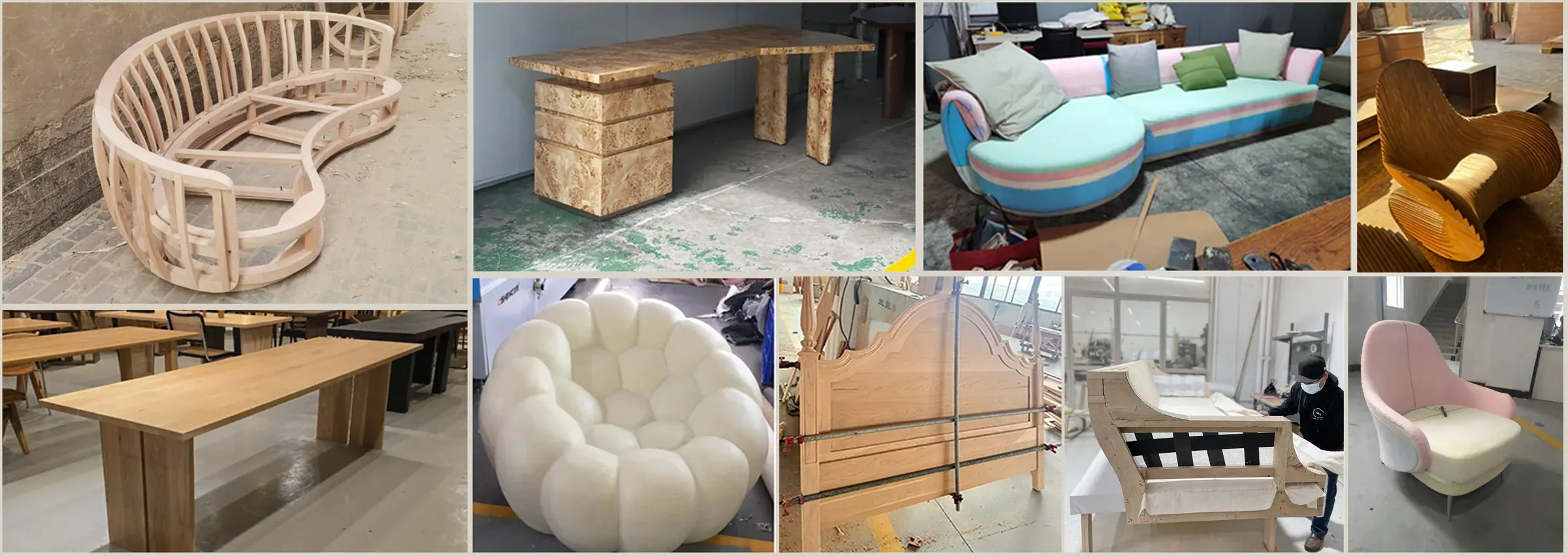

Nothing needs to be hidden when the process is honest.
The unfinished timber, internal frame and preparation layers may never be seen by the final user. They still carry the discipline of the people who made them. What is invisible today becomes the comfort, durability and confidence experienced tomorrow.
Unseen work is still specified work. What FF&E is not marks the boundary of the package, and the linked material pages record the hidden decisions that sit inside it. The measurable end of that discipline is the furniture finish quality standard, which turns preparation, colour, sheen and edge coverage into a range an inspector can approve rather than a matter of opinion.
Adapted for international readers from Tang Wan’s public YUESHAN journal, originally published on 17 August 2023. View the original source ↗