FF&E Materials & Quality: Understand What You Are Actually Buying
Material names are not complete specifications. Two quotations can both say marble, leather, MDF or high-density foam while referring to different grades, construction, finishes, performance and approval standards. Compare those hidden variables before comparing price. Approval only works when someone owns it: fix the split on the responsibility matrix, and keep the inspection method in the quality-control guide.
What you cannot see should still be beautiful.
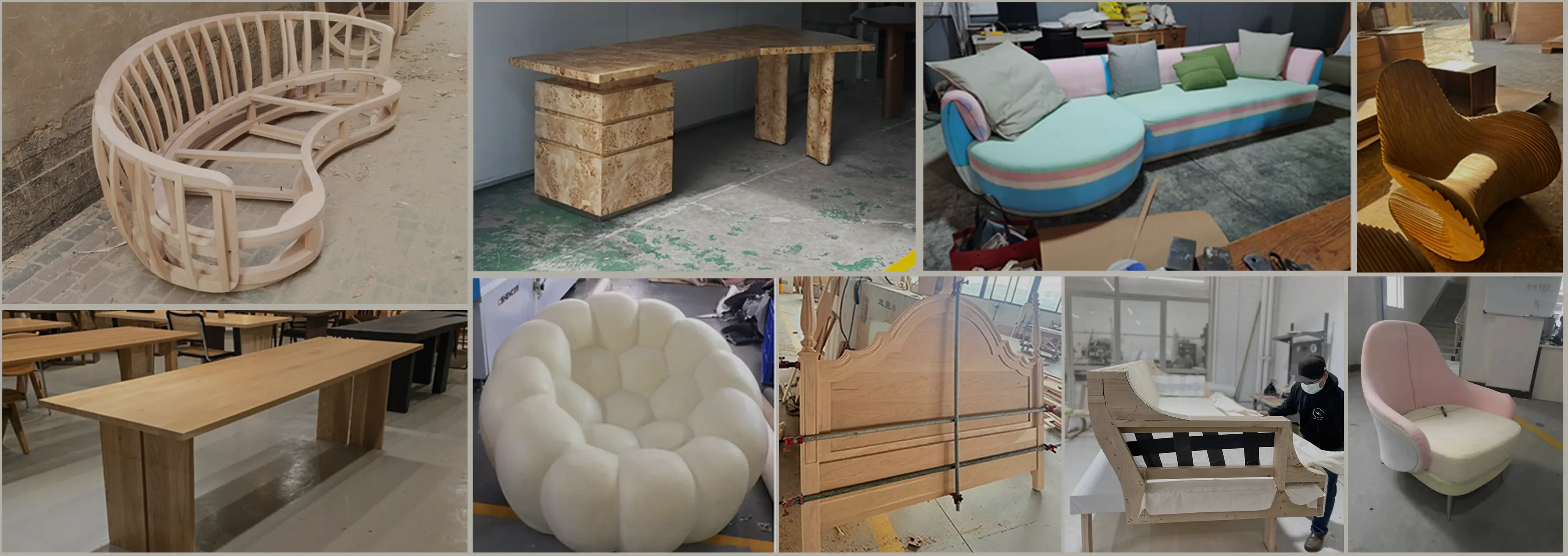
The back of a sofa, the structure beneath upholstery, the preparation below a finish and the discipline of a workshop may disappear from view when a product is complete. They should never disappear from the quality standard.
The fields below are a project framework, not a promise that every material or standard applies automatically. Final requirements are confirmed from drawings, room use, destination regulations and approved samples.
01
Material guides
Define what the material is, how it should look and perform, and what variation can be accepted.
Neither is automatically better. The right choice depends on visual intent, batch consistency, maintenance, fabrication risk and budget predictability.
Hinges, slides, locks, connectors, glides and power/data interfaces are specified by use frequency, load and maintenance access.
Brand or approved equal · finish · load · cycle expectation · soft close · spare allowance
Five approval points.
01
Specification review
Drawings, interfaces, dimensions, materials and performance requirements
02
Material approval
Physical finish samples, stone slab or veneer control, hardware submissions
03
Prototype / mock-up
Critical dimensions, comfort, workmanship, function and visual alignment
04
In-process inspection
Structure or white body, finish, upholstery and assembly checkpoints
05
Final & packing release
Appearance, function, quantity, labels, protection and loading sequence
A label is not an acceptance standard.
Final selections are confirmed per project from drawings, room use and destination requirements. “Hotel grade”, “commercial grade” and “premium” do not define one universal material or construction level. Required performance, applicable documentation and acceptance methods must be agreed for the selected product and intended use.
Board & panel substrates
Identify the product, component thickness, edge and fixing detail. Confirm destination-specific documentation against the actual supplied panel rather than assuming an emission label applies everywhere.
Veneer, laminate & paint
Natural or engineered veneer, HPL, melamine and lacquer systems agreed through control samples; grain, sheen and edge treatment recorded.
Upholstery build-up
Specify frame, joints, suspension, cushion layers and cover separately. Record comfort and performance requirements with the review method and accepted reference.
Hardware
Name the proposed product, fixing and required function. Any alternative needs an agreed comparison and approval, not an unexplained approved-equal label.
Inspection & release
Agree visible and concealed checkpoints, acceptance references, reporting and the person authorized to close issues before release. Do not assume a universal A/B inspection grade.
Turn a material preference into a comparable specification.
Begin with where the FF&E package boundary sits so the material decision belongs to the right package, then start with the item code and use environment. Identify the material and concealed build-up, record the supplier/product and sample references, then agree what remains to be tested, reviewed or approved. A blank field stays open; it is not permission to substitute.
Choose the relevant material guide and define the missing fields.
Use a tool to prepare a discussion draft, not a production approval.
Compare offers using the same item, revision and agreed scope.
Link accepted materials to samples, inspection references and the final release decision.
A reference image is not a complete quality standard. Each approved item should connect its drawing revision, material and finish sample, hardware submission, prototype decision and inspection record. When natural timber, veneer, leather or stone varies, the acceptable range must be agreed rather than assumed.
YUESHAN's March 2025 company profile documented four connected control areas: drawings, materials, workmanship and packaging. For a current order, the applicable records, inspection stages and release authority must be confirmed in the project proposal.
Material names are only the beginning of a specification.
Two quotations can both say wood, stone, metal or leather while describing very different build-ups, finish systems, tolerances and approval responsibilities.
Owner
What quality will remain visible in use?
Touch, edges, junctions, colour consistency, comfort, movement and the way materials age under the actual operating conditions.
Procurement
How is substitution controlled?
Define approved material identity, sample reference, acceptable variation, change route and the evidence required before an alternative is accepted.
Designer
Which qualities are difficult to put into a product name?
Sheen, grain, tactility, edge softness, colour depth, joint expression and the relationship between adjacent materials.
Bring to the conversation
Share the latest drawings or rendering, furniture schedule or BOQ, room quantities, destination, target programme, material references and the decisions that are still open. We will identify what can be quoted now and what should be clarified before production.
 YUESHANDECODesign-led custom furniture & FF&E delivery partner in ChinaSubmit a project ↗