 YUESHANDECODesign-led custom furniture & FF&E delivery partner in ChinaSubmit a project ↗
What Is FF&E? What Is Included and Who Is Responsible?
What belongs in your furnishing package, what may be excluded, and who needs to confirm it before you buy. What falls outside the package usually surfaces later, in the development stages, so settle it here first.
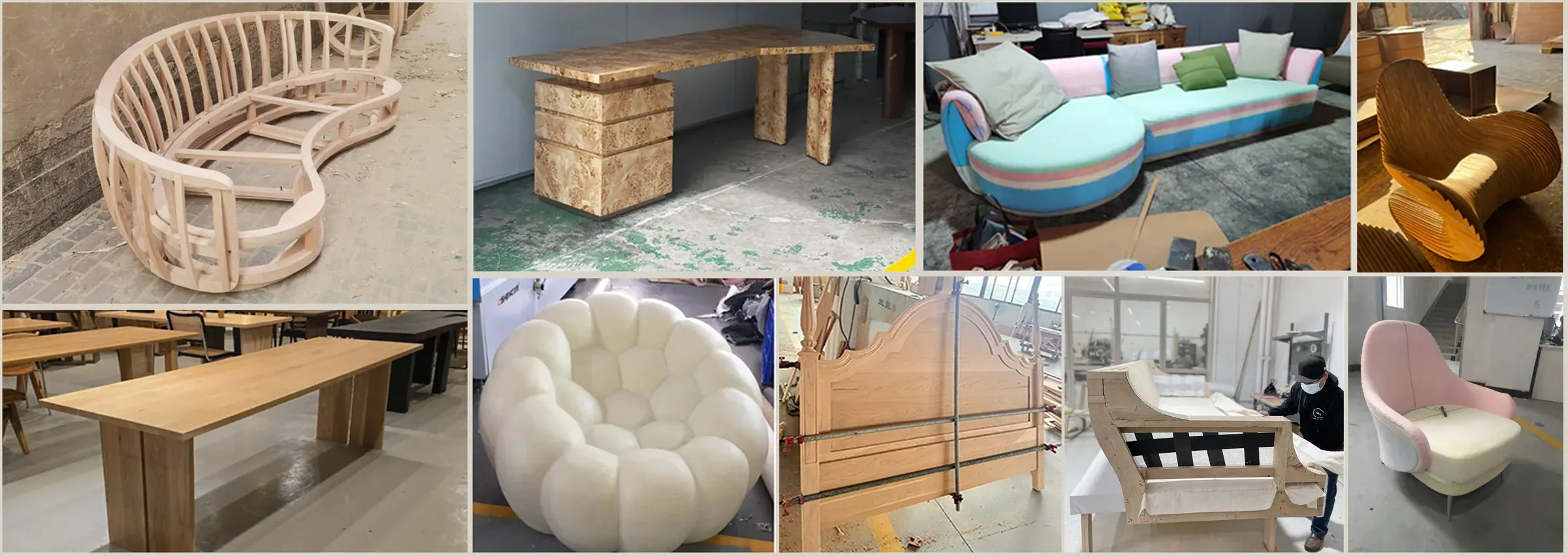
FF&E — Direct Answer
FF&E stands for Furniture, Fixtures and Equipment. In interior, hospitality and construction projects, the term generally describes the movable or project-furnished items that make a completed space usable, comfortable and operational—from beds, sofas and tables to decorative lighting, equipment and selected fixtures. If the package also contains operating supplies, check the FF&E and OS&E boundary.
But knowing what FF&E stands for is only the beginning. For an owner, interior designer, procurement team or contractor, the harder questions are: What belongs in the FF&E budget? What sits under OS&E or millwork instead? What information must be defined before suppliers can quote accurately? How do you protect design intent when furniture moves from rendering to shop drawing, sample, mass production and installation? The material and construction standards behind each stage are covered in a separate pillar guide.
This guide is the reference for the term itself: what FF&E stands for, which items sit outside the package, who is responsible at each stage and how the twelve-stage lifecycle runs. For the project route that follows the definition—scope, specification, sourcing, approvals and handover—use the FF&E project decision path; use the linked guides for detailed purchasing, material and delivery decisions.
This is a furnishing-project guide, not guidance on tax, depreciation, asset valuation, business sales or leases. It does not review procurement software; the checklists here help organize project information, not replace a purchasing system.
FF&E at a Glance
| Category | What It Means | Common Examples | Typical FF&E Treatment |
|---|---|---|---|
| Furniture | Movable pieces that furnish a space | Beds, sofas, chairs, tables, desks | Usually FF&E |
| Fixtures | Items attached or connected but treated as furnished scope | Decorative lights, shelving, selected mounted items | Depends on project scope |
| Equipment | Operational equipment supplied for the space | TVs, minibars, audio/video equipment, appliances | Often FF&E |
| Casegoods | Furniture built with hard surfaces/storage functions | Nightstands, wardrobes, dressers, desks | Usually FF&E when loose/freestanding |
| Built-in Millwork | Site-coordinated fitted joinery | Reception desks, wall panels, built-in wardrobes | Often separate architectural/joinery scope |
| OS&E | Operating supplies and smaller operational equipment | Linen, tableware, utensils, housekeeping items | Usually separate |
| MEP | Building mechanical, electrical and plumbing systems | Heating, ventilation, air conditioning, wiring and fixed plumbing | Not FF&E |
Instead of asking only “Can this item be moved?”, ask:
- Who specifies it?
- Who buys it?
- Who installs it?
- Which contract or budget package owns it?
That produces a more useful project answer than relying only on a simplified “turn the building upside down” definition.
What Does FF&E Stand For?
FF&E means Furniture, Fixtures and Equipment.
The phrase is widely used across interior design, architecture, hospitality, commercial interiors, construction, property development, procurement and facility operations.
The exact boundary is not identical on every project. A hotel operator, interior designer, general contractor and accountant may group certain items differently. Therefore, the project scope, specifications, BOQ, responsibility matrix and contract documents should take priority over a generic definition.
That distinction becomes especially important for lighting, appliances, equipment and built-in joinery.
The Quote Says “FF&E Included.” What Should I Check?
Ask for the item list and the work included—not just the package name. “FF&E included” may describe a budget allowance, a supply order or a wider service. It does not, by itself, promise a room ready to use.
| What you may read | What to ask before agreeing | Record to request |
|---|---|---|
| Supply only | Who unloads, assembles, fixes and connects the items? | Delivery point and installation responsibilities |
| By others | Which named company supplies or completes this part? | Responsible party and required date |
| Allowance | Is this a budget placeholder or a confirmed price for specified goods? | Included quantity, specification and pricing basis |
| Approved equivalent | What changes, and who must approve it before ordering? | Written comparison and approval reference |
| Turnkey / package deal | Does it include site work, installation and defect correction? | Included work, exclusions and acceptance checklist |
| Ready for opening | Are operating supplies, final connections and handover also arranged? | Separate FF&E, OS&E and contractor task lists |
These are example contract phrases, not quotations from customers. For each item, record its code, room, quantity, specification revision, supplier, approver, installer and exclusions. Leave an unanswered responsibility marked “to be agreed” rather than assuming someone else owns it.
Use the responsibility matrix to agree who does what. Once the scope is clear, check whether supplier quotations cover the same work.
Furniture vs Fixtures vs Equipment
Furniture
Furniture is generally the easiest category to recognize. Typical FF&E furniture includes sofas, lounge chairs, dining chairs, side chairs, beds, headboards, nightstands, desks, dining tables, coffee tables, side tables, benches, ottomans, loose wardrobes and consoles.
But two pieces that appear identical in a rendering can have very different specifications. A sofa, for example, may vary by frame construction, timber species, plywood specification, foam construction, foam density, suspension, fabric performance, leather grade, seam construction, fire requirements, leg material, hardware and packaging.
“Sofa – 1 pc” is not an adequate procurement specification.
Fixtures
Fixtures sit in a more ambiguous zone. They may include decorative pendant lighting, wall sconces, mirrors, shelving, display systems and decorative mounted accessories.
Whether an item is classified as FF&E often depends on the project. Decorative lighting may be selected by the interior designer and procured with the FF&E package, while recessed architectural lighting may remain within the electrical construction scope.
The useful procurement question is not simply “Is it technically attached?” It is: Which package is responsible for specification, procurement, interface coordination and installation?
Equipment
Equipment supports the operation of a room or facility. Depending on the project, it might include televisions, minibars, refrigeration equipment, coffee machines, audio/video equipment, office equipment, commercial kitchen equipment, laundry equipment and specialized operational equipment.
Some equipment requires electrical, plumbing or structural coordination even though it is procured separately.
Equipment dimensions, clearances, power requirements, plumbing connections, ventilation and structural support may still need to appear in coordinated drawings.

What Is Not FF&E?
Typical exclusions can include structural work, heating and air-conditioning systems, electrical wiring, plumbing infrastructure, fire suppression systems, permanent partitions, architectural finishes and major building systems.
Is millwork part of FF&E?
There is no useful universal yes/no answer for every project.
Built-in architectural millwork is commonly separated from strict loose FF&E scope. In real hospitality procurement, however, a coordinated furnishing package may include loose furniture, casegoods, headboards, vanities, built-in wardrobes, wall panels, reception desks and decorative joinery under one sourcing or manufacturing program.
Classification and procurement scope are not always the same thing.
A fitted reception desk may be architectural millwork from a classification perspective while still being sourced and coordinated alongside the project's FF&E.
For site-sensitive built-ins, see our custom millwork field-fit guide.
FF&E vs OS&E: What Is the Difference?
OS&E means Operating Supplies and Equipment. It covers items used to operate the property, including supplies and smaller equipment. Not everything in OS&E is disposable: tableware and housekeeping equipment can be durable. The operator's agreed item list matters more than lifespan alone.
| FF&E | OS&E |
|---|---|
| Beds | Bed linen |
| Nightstands | Guest amenities |
| Lounge chairs | Towels |
| Dining tables | Plates and cutlery |
| Decorative lights | Small operating supplies |
| Casegoods | Housekeeping supplies |
| Major selected equipment | Replenishable operational items |
A useful hotel rule is: FF&E furnishes the property; OS&E helps operate it day to day.
Individual operator standards and procurement packages should always be checked. FF&E and OS&E may have different budgets, procurement schedules, vendors, approval processes, replacement cycles, storage requirements and delivery timing.
FF&E in Hospitality
Hospitality is one of the most FF&E-intensive project types because both guest experience and operational durability depend heavily on furnishing decisions.
Guestrooms
- Beds and headboards
- Nightstands
- Desks and desk chairs
- Lounge seating
- Benches
- Wardrobes
- Minibars
- Mirrors
- Decorative lighting
Lobby & Public Areas
- Sofas and lounge chairs
- Coffee tables and consoles
- Reception furniture
- Decorative screens
- Rugs and artwork
- Decorative lighting
Restaurants & Bars
- Dining chairs
- Bar stools
- Dining tables
- Banquettes
- Host stations
- Service furniture
Why Hospitality Is Different
Repeated production magnifies small specification mistakes. A problem in one prototype chair is manageable. The same problem repeated across hundreds of rooms becomes a project issue.
That is why model rooms, approved samples, production controls and finish consistency matter.
For a room-by-room supply brief rather than a definition, see what to confirm in a hotel FF&E package.

What Is FF&E in a Restaurant or Store?
In a restaurant, the furnishing list may include dining tables, chairs, bar stools and service furniture. Plates, cutlery and linen usually sit on a separate operating-supplies list. A fitted banquette, kitchen appliance or extraction system needs an explicit package owner; do not assume the furniture supplier covers the kitchen or building services.
In a store, examples include loose display tables, seating and selected display fixtures. Fixed counters, shelving supports, electrical connections and point-of-sale equipment need their own scope decisions. Agree who supplies the item and who makes the site ready for it.
For project-specific furniture decisions, continue to commercial furniture scope and exclusions.
FF&E in Interior Design
For an interior designer, FF&E is not merely a purchasing list. It is one of the primary tools used to translate:
concept → material → scale → color → texture → comfort → user experience
A strong FF&E specification should protect both visual intent and technical intent.
| Visual Intent | Technical Intent |
|---|---|
| Proportion | Dimensions |
| Shape | Materials |
| Finish | Construction |
| Color | Performance |
| Texture | Hardware |
| Pattern | Durability |
| Detailing | Maintenance / Compliance / Interfaces |
This is where many projects begin to lose design fidelity. A rendering can show what an item should look like. It usually does not contain enough information to define how it should be made.
An FF&E designer selects and specifies these items; the agreed appointment determines whether they also manage purchasing or installation. See how design development fills the missing manufacturing details.

FF&E in Construction
Construction teams interact with FF&E at interfaces. Typical coordination issues include power locations, floor boxes, lighting connections, wall blocking, plumbing, floor levels, ceiling heights, door clearances, built-in dimensions, finished wall thicknesses, access routes and installation sequencing.
This matters most with millwork, wall-mounted furniture, integrated headboards, vanities, reception desks, equipment and decorative lighting.
A piece can be manufactured correctly according to an outdated drawing and still fail on site. Manufacturing accuracy does not replace field coordination.
For a built-in item, check the drawing revision, fixing details and site measurements before approval.
Who Is Responsible for FF&E?
A useful FF&E responsibility matrix looks like this:
An FF&E contractor or procurement partner may coordinate suppliers, approvals and delivery, but the title alone does not define the appointment. Ask separately whether design, inspection, site installation and defect correction are included. The following roles are examples, not a statement that one company performs them all.
| Party | Typical Responsibility |
|---|---|
| Owner / Developer | Budget, approvals, business requirements |
| Interior Designer | Design intent, specification, finish selection |
| Architect | Architectural coordination |
| Procurement Team | Requesting quotations, comparing offers, purchasing and tracking |
| Manufacturer / Supplier | Technical development, samples, production |
| General Contractor | Site interfaces and construction coordination |
| Installer | Site installation |
| Receiver / Warehouse | Receiving, inspection, storage |
| Operator | Operational requirements and handover |
Responsibility varies by contract. That is why one of the first FF&E documents should answer:
Who specifies, approves, buys, manufactures, receives, installs and owns each risk?
Use our FF&E Responsibility Matrix to structure this before a problem occurs.
The FF&E Lifecycle: From Design Intent to Handover
For custom and hospitality FF&E, the manufacturing and procurement steps deserve to be separated clearly.
1. Design Intent
Inputs may include renderings, plans, furniture layouts, reference images and brand standards. At this stage the item may look complete visually but still be technically undefined.
2. FF&E Schedule / Bill of Quantities (BOQ)
Items receive item codes, locations, quantities, dimensions and initial descriptions. A BOQ is a purchasing framework—not automatically a complete manufacturing specification.
Before issuing a quote package, run a BOQ Readiness Check.
3. Specification Development
The project begins defining material, finish, construction, hardware, upholstery, performance, compliance, dimensions and interface requirements. This is where quotation comparability is created.
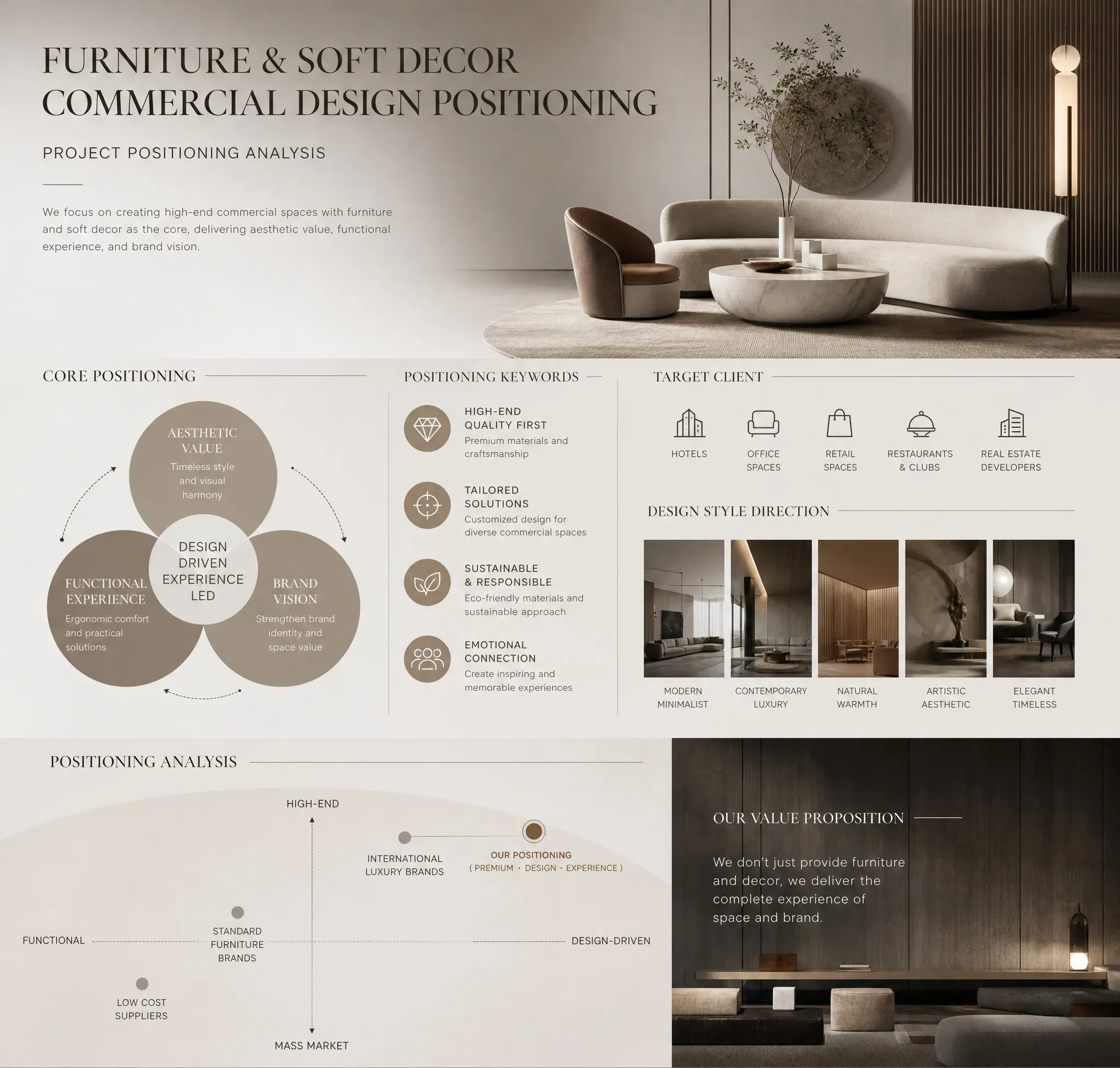
4. Budgeting and Value Engineering
Cost should be analyzed by cost driver, not simply by asking every supplier to “make it cheaper.”
| Original Requirement | Cost Driver | Possible VE | What Must Be Checked |
|---|---|---|---|
| Solid stone top | Material + weight | Alternative stone / engineered surface | Appearance, edge, durability |
| Premium imported fabric | Textile cost | Approved equivalent | Hand, color, performance |
| Complex solid wood form | Labor + yield | Veneered engineered construction | Visible result, stability |
| Custom metal detailing | Fabrication | Simplified hidden construction | Design fidelity |
Good VE protects the project's priority outcomes. Cost reduction without understanding what changes is not value engineering.
5. Request for Quotation (RFQ) and Quote Comparison
A supplier quote is only comparable when suppliers are pricing the same agreed scope. A useful RFQ should define item code, quantity, dimensions, materials, finish, upholstery, hardware, construction requirements, testing/compliance requirements, packaging, the agreed delivery term and named place, delivery destination, required samples, shop drawings and lead-time requirement.
Illustrative example only: Quote A at $600 and Quote B at $430 may not describe the same product or scope. The price difference may be inside the specification.
Use the FF&E Quote Comparison Tool to normalize scope before comparing price.
6. Shop Drawings
Shop drawings show how the item will be made and fitted. Where AWI requirements apply to architectural woodwork, AWI's submittal guidance calls for review before fabrication and for proposed material or design changes to be identified for approval.
A buyer should normally review:
- Latest revision
- Item code
- Overall dimensions
- Plans
- Elevations
- Sections
- Materials
- Finish references
- Hardware
- Attachment
- Interfaces
- Field dimensions
- Substitutions
- Sample references
- Approval status
See our Furniture Shop Drawing Audit.
7. Samples, Mock-ups and the Golden Sample
A finish sample answers: “Does the color/material look right?” A full furniture mock-up can also answer: Are the proportions right? Is the seat comfortable? Is the stitching correct? Does the drawer operate correctly? Is the sheen acceptable? Does the veneer direction match? Is the hardware appropriate? Are the dimensions correct?
An approved sample is useful only if production is controlled against it.
The production reference should record what was actually approved: drawing revision, material, finish, fabric/leather, hardware, construction, comments and approval date.
Read From Model Room to Bulk Production.

8. Manufacturing
At mass-production stage, the question is no longer “Can the factory make one good sample?” It becomes: Can the approved result be repeated consistently across the order?
Relevant controls can include incoming material checks, veneer selection/matching, timber moisture control, color approval, finish control, cutting and machining, structural assembly, upholstery, hardware, final dimensions, function testing and batch consistency.
9. Quality Control and Pre-Shipment Inspection
A useful FF&E QC system checks more than appearance:
| Control Area | Question |
|---|---|
| Specification | Is it the approved product? |
| Dimensions | Does it match the approved drawing? |
| Material | Were approved materials used? |
| Finish | Does color, sheen and texture fall within the approved range? |
| Construction | Are joints, frame and hardware appropriate? |
| Function | Do doors, drawers, mechanisms and adjustable elements operate properly? |
| Upholstery | Are seams, pattern alignment, tension and workmanship acceptable? |
| Quantity | Are item codes and quantities correct? |
| Packaging | Can the finished item survive the planned distribution route? |
Final inspection is the last control point, not the first quality-control activity.

10. Packaging and International Logistics
Furniture may leave the factory perfect and arrive damaged. Packaging should respond to product weight, fragile surfaces, corners, glass, stone, metal finishes, upholstery, moisture, handling, stacking, container loading, warehousing and last-mile delivery.
ISTA Procedure 2C is a partial simulation test for individual furniture packages. It does not guarantee damage-free delivery, and naming a procedure is not proof that a package has been tested. Ask which test fits the transport route and for the report covering the actual package.
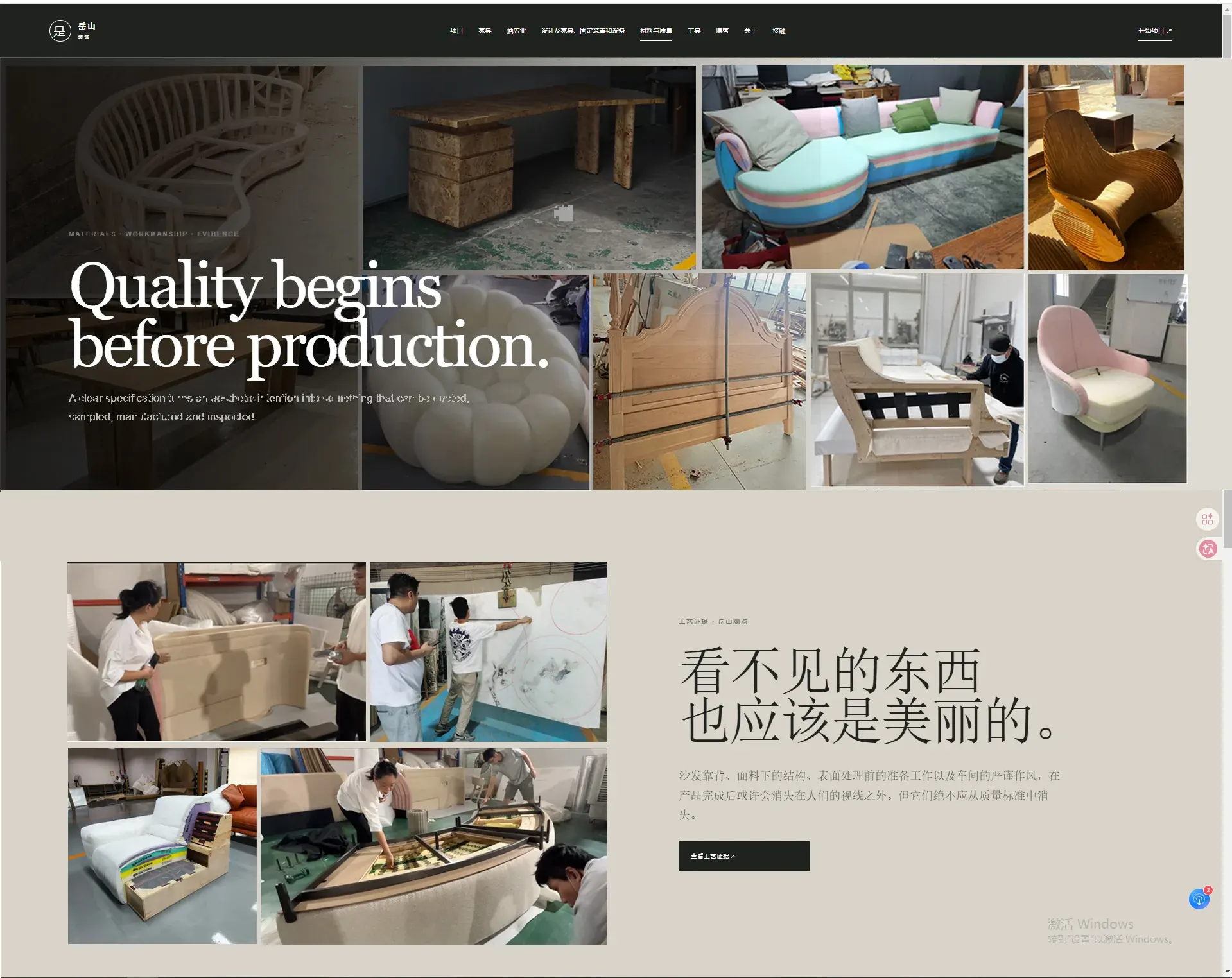
11. Receiving, Installation and Pre-Punch
FF&E installation means placing, assembling and, where agreed, fixing the furnishings on site. Delivery alone is not installation. Electrical and plumbing connections, wall preparation and specialist fixing must have named responsible trades. A pre-punch check is an early inspection for defects before the formal handover inspection.
Projects should define: Who receives? Who checks visible damage? Who records concealed damage? Who stores? Who releases goods? Who installs? Who protects installed furniture? Who closes defects?
A structured pre-punch inspection before the owner's formal walk can reduce avoidable closeout issues.
12. Handover and Spare Parts
FF&E handover can include final inventory, warranty information, care instructions, finish references, spare hardware, spare fabric, spare leather, touch-up materials, replacement item information, approved drawings and maintenance requirements.
A Practical FF&E Workflow Example
Consider a hotel designer who specifies a custom bedside table. The initial input may include a rendering, approximate dimensions, a timber finish reference and a stone top reference. The next step is not immediately production — the item first needs clarification.
Stage 1 — Design Interpretation
Confirm overall dimensions, drawer arrangement, open or closed storage, leg design, stone thickness, edge profile and handle design.
Stage 2 — Material Definition
Confirm substrate, veneer species and cut, timber stain, stone type, metal finish and drawer hardware.
Stage 3 — Shop Drawing
Translate the design into measurable construction information.
Stage 4 — Samples
Approve veneer, stain, stone and metal finish.
Stage 5 — Prototype or First Article
Check proportion, function, drawer movement, stability and finish quality.
Stage 6 — Production
Manufacture against the approved references.
Stage 7 — QC
Inspect dimensions, materials, finish, hardware, workmanship and packaging.
This is the difference between saying “please make this table” and creating a system where the designer, purchaser, manufacturer and inspector share the same definition of what “this table” means.
The same translation happens at project scale. Each design input needs a production counterpart:
| Design Input | Production Translation |
|---|---|
| Mood board | Material and finish direction |
| Rendering | Construction interpretation |
| Reference image | Measurable specification |
| Furniture plan | Item location and quantity |
| BOQ | Scope and quantity control |
| Sketch | Shop drawing requirements |
| Fabric selection | Upholstery specification |
| Material reference | Approved material sample |
| Target budget | VE options |
| Brand standard | Performance and QC checkpoints |
For the field list behind a usable specification, see what goes into an FF&E specification.
Expert Insight: FF&E Is Not Just Sourcing
One of the most common misconceptions is that FF&E is mainly about finding products and suppliers. Sourcing is important, but the most difficult part of custom FF&E is often the information between the design and the factory.
A reference image is not a production specification. A rendering is not a shop drawing. A material name is not an approved finish. A quotation is not proof of technical equivalence.
Before manufacturing begins, design intent needs to become measurable requirements such as: dimensions, substrate, veneer, finish, stone, metal, glass, upholstery, hardware, construction, interfaces, samples and inspection criteria.
This translation discipline is what our design director Tang Wan describes from the studio side — design intent only survives production when it is written down.
FF&E Procurement Is More Than Buying Furniture
A useful way to define procurement is:
FF&E procurement is the agreed process for converting an accepted design and specification into ordered goods and coordinating them through the included approval, production, inspection, delivery and, where appointed, installation stages.
Agree the specification → request prices → compare scope → place the purchase order → approve drawings and samples → check production → arrange delivery → receive and install → close outstanding defects.
Purchasing is the ordering and payment part of that process. Procurement also covers deciding what to buy and following it through the agreed scope.
This is why professional procurement is closer to project risk management than ordinary online shopping.
For commercial project support, see how Yueshan handles specification-led procurement.
Which FF&E Sourcing Model Fits the Project?
Not every project needs the same model.
Direct buying means your team orders and coordinates suppliers. Hybrid buying splits that work with a partner. Managed procurement gives a partner the agreed coordination tasks; it does not automatically transfer every site responsibility. The table is a starting point, not a rule that any model is compulsory.
| Project Condition | Direct Buying | Hybrid | Managed FF&E |
|---|---|---|---|
| Few standard items | ✓ | ||
| Mostly catalogue products | ✓ | ✓ | |
| Custom furniture | ✓ | ✓ | |
| Multiple factories | ✓ | ✓ | |
| Customer-supplied fabric or leather (COM/COL) | ✓ | ✓ | |
| Custom millwork | ✓ | ||
| Fixed opening date | ✓ | ✓ | |
| Complex international logistics | ✓ | ✓ | |
| Model-room approval | ✓ | ✓ | |
| High coordination risk | ✓ |
The better question is not “Is direct factory always cheaper?” It is: Which sourcing structure gives this project the required control at an acceptable total cost?
Try the FF&E Sourcing Model Selector.
FF&E Materials & Quality: Why Similar Furniture Can Have Different Prices
One of the biggest mistakes in FF&E buying is treating appearance as specification.
Consider two visually similar nightstands. Both may look like “oak veneer nightstand with stone top,” but the quotation can differ because of core material, veneer, stone, hardware and finish.
Wood / Core
- Medium-density fibreboard (MDF)
- Particleboard
- Plywood
- Solid timber
- Core thickness
- Moisture resistance
Veneer
- Natural / engineered
- Species
- Cut
- Matching
- Grade
- Color range
Stone
- Natural stone
- Sintered stone
- Engineered quartz
- Thickness
- Edge construction
- Reinforcement
Hardware & Finish
- Hardware model and required performance
- Visible wood pores or a filled smooth surface
- Polyurethane coating / lacquer / stain
- Gloss level
Visual similarity ≠ specification equivalence.
Price tier ≠ technical grade ≠ visual grade.
Explore the full FF&E Materials & Quality hub and the Sofa Construction Anatomy guide.

Contract Fabric: Higher Abrasion Numbers Do Not Automatically Mean Better Fabric
Fabric is a good example of why specification needs context. Buyers frequently compare only Martindale cycles or Wyzenbeek double rubs.
ACT's abrasion guidance warns that abrasion results alone do not reliably predict service life and that Wyzenbeek and Martindale results cannot be directly converted.
Also check whether the fabric develops surface balls (pilling), transfers colour when rubbed (crocking), fades in light, or pulls apart at seams. Confirm cleaning instructions, applicable fire requirements, pattern repeat and width. If you supply your own fabric, agree the required quantity and who checks it before cutting.
A larger abrasion number is not a universal “higher-quality fabric” score.
Use our Contract Fabric Selector and read the COM & COL Guide.
Upholstery Fire Compliance: Check the Actual Market and Use
Requirements vary by country, jurisdiction and application.
For U.S. upholstered furniture within the federal scope, CPSC explains that 16 CFR Part 1640 uses the TB 117-2013 test method for smolder resistance and includes labeling requirements. Have the project's compliance adviser confirm which requirements apply to the specific product and location.
That is more precise than simply writing “TB117 foam” or “CAL133 certified furniture.”
Compliance should be confirmed against product + use + jurisdiction + project specification before procurement.
See CAL 133 vs TB 117-2013: What U.S. Upholstered Furniture Buyers Should Check Now.
FF&E Cost: Compare Landed Cost, Not Only Unit Price
FF&E cost can mean the goods alone or the wider furnishing budget. Ask whether design fees, procurement fees, samples and installation are separate. A contractor's charge depends on the work agreed; there is no project-independent fee to quote here. Use the guide to fixed, percentage and hybrid procurement fees to compare proposals.
A useful cost model is:
Total furnishing budget = Goods + Professional services + Samples + Packing and transport + Applicable duties/taxes + Receiving and storage + Installation + An allowance for unresolved risks.
| Cost question | Check both quotations |
|---|---|
| Goods | Same quantities, materials, construction and finishes? |
| Transport | Same delivery point, packing and handling scope? |
| Services | Design, coordination and installation included or separate? |
| Unknown costs | Which allowances or exclusions still need confirmation? |
The cheapest quotation is not automatically the lowest-cost project outcome.
Use the FF&E Landed Cost Calculator.
8 Common FF&E Project Risks—and How to Control Them
| Problem | Typical Cause | Better Control |
|---|---|---|
| Quotes cannot be compared | Specifications incomplete | Standardized RFQ |
| Material downgraded | Undefined material or substitution | Approved specification + substitution control |
| Finish inconsistency | One tiny sample used as absolute reference | Approved range / control sample |
| Millwork does not fit | Site dimensions changed | Verify in field (VIF): check actual site measurements against drawings |
| Sample good, bulk different | Production reference unclear | Golden sample + first-production review |
| Delivery damage | Packaging not designed for route | Packaging review / appropriate testing |
| Opening delay | Lead time considered too late | Backward lead-time plan |
| Punch list explodes | Problems discovered only at installation | Upstream QC + pre-punch |
This is where FF&E becomes a management discipline rather than a product category.
Where the Problem Starts: Seven Symptoms and Their Origins
Many FF&E problems appear during production or installation but originate much earlier. The table above shows controls; these are the same failures heard on site, traced back to their origin.
| What the Team Says | Where It Started |
|---|---|
| “The product does not look like the rendering.” | The rendering communicated appearance but did not define measurable material or finish requirements. |
| “The supplier quoted the wrong construction.” | The RFQ did not include enough technical information. |
| “The sample is correct but production is different.” | The approved sample was not connected clearly to the production QC criteria. |
| “The furniture does not fit the site.” | Field dimensions, door access or architectural interfaces were not confirmed. |
| “The fabric quantity is not enough.” | Repeat, direction, width or wastage was not included in the COM calculation. |
| “The finish colour varies between items.” | The reference standard or production control was not sufficiently defined. |
| “The project is over budget.” | VE occurred too late, after specifications and supplier commitments were already fixed. |
The lesson is that FF&E risk is usually cumulative: small ambiguities in early documentation can become expensive problems later.
Essential FF&E Documents
An FF&E book usually brings together the item specifications, reference images, finishes and room references. An FF&E schedule is the item-by-item list. Neither automatically confirms that purchasing or installation is included.
When sending an FF&E proposal to a client, separate proposed choices from approved items. Include the dated revision, item codes, quantities, images, specifications, budget basis, exclusions and decisions needed. A presentation image is not permission to start production.
| Document | Purpose |
|---|---|
| FF&E Schedule | Item/location control |
| BOQ | Quantities and commercial scope |
| Specification Sheet | Technical requirements |
| RFQ | Comparable supplier bidding |
| Quote Comparison | Commercial decision |
| Finish Schedule | Approved finishes |
| Shop Drawings | Manufacturing definition |
| Material Submittal | Material approval |
| Sample Approval | Approval reference |
| Model Room Report | Prototype review |
| Purchase Order | Commercial authorization |
| Production Schedule | Manufacturing tracking |
| Quality Control / Pre-Shipment Inspection Report | Checks completed, defects found and release status |
| Packing List | Logistics identification |
| Delivery Schedule | Site sequencing |
| Punch List | Defect closeout |
| Handover Register | Operations and maintenance |
The important idea is not having more paperwork. It is: Every important decision should have a controlled reference.
For example, keep the same chair code on its schedule row, specification, quotation, approved sample and delivery list. Check the missing information in your item list before asking suppliers to price it.
FF&E Standards and Compliance
There is no single global “FF&E standard.” Requirements depend on product type, market, project type, contract, jurisdiction and operator standard.
Upholstered furniture — U.S.
CPSC / 16 CFR Part 1640 / TB 117-2013 are relevant for applicable upholstered furniture.
Contract textiles
ACT performance guidelines help interpret individual textile tests according to end use rather than treating one metric as a universal quality grade.
Architectural woodwork
AWI standards provide useful professional guidance for submittals, shop drawings, samples, materials and field coordination.
Packaging
ISTA provides packaged-product testing procedures, including Procedure 2C for individual furniture packages/casegoods.
The project specification and applicable law remain the controlling requirements. Do not write “certified” or “tested” unless the actual product/package has the supporting evidence.
Is This Item FF&E? Scope Decision Tool
This quick tool does not replace project contract documents. It helps identify the likely scope based on how the item is specified, purchased and installed.
FF&E Tools & Templates
Choose the checklist for the question you need to resolve next. Results are working notes to review with your team, not a confirmed scope or supplier approval.
Frequently Asked Questions About FF&E
What does FF&E stand for?
FF&E stands for Furniture, Fixtures and Equipment. It generally covers furniture and project-furnished items used to make a building functional after or alongside base construction.
What is FF&E in construction?
In construction, FF&E generally refers to items coordinated with the building but procured outside the permanent structural and major building-system scope. Exact responsibility should be defined in the project documents.
What is FF&E in interior design?
FF&E is the furniture, selected fixtures and equipment chosen to make an interior usable. The designer specifies their appearance, size, materials and finish. Building finishes such as flooring or wall paint are not automatically part of the FF&E supply package.
What is FF&E in a hotel?
Hotel FF&E commonly includes guestroom furniture, casegoods, loose public-area furniture, decorative lighting and selected equipment. Exact scope varies by operator and project.
What is the difference between FF&E and OS&E?
FF&E generally covers durable furnishing assets; OS&E covers operational supplies and smaller equipment needed for day-to-day operation.
Is millwork FF&E?
Built-in millwork is often separated from strict FF&E classification, although hospitality procurement or manufacturing packages may coordinate both together. Follow the project scope and responsibility matrix.
Are light fixtures FF&E?
Decorative lighting may be procured as FF&E, while integrated architectural lighting and electrical infrastructure are commonly coordinated through construction trades. Project scope controls.
What is an FF&E schedule?
An FF&E schedule identifies items by code, description, location and other project data. It may include quantities, finishes, manufacturers, pricing and procurement status. A furniture schedule sample is usually built from the project's own room list rather than copied from a template, because codes, quantities and locations have to survive quotation, approval and delivery; the hotel furniture BOQ builder turns room counts into an editable quantity summary that can be adapted into one.
What is FF&E procurement?
FF&E procurement manages the agreed commercial and coordination path from specification and RFQ through purchasing, approvals, production follow-up, shipping and receiving; installation is included only where the appointment says so.
What is FF&E value engineering?
FF&E value engineering examines the real cost drivers in a product and evaluates alternatives while controlling the effect on appearance, performance, maintenance, schedule and risk.
What is a golden sample?
A golden sample is an approved physical production reference used to communicate the accepted materials, finish, workmanship and other characteristics against which later production can be checked.
Why are two FF&E quotes sometimes very different?
Quotes may be based on different materials, construction, hardware, finishing, testing, packaging, logistics assumptions or exclusions. Unit price should only be compared after specification and scope are normalized.
Does FF&E included mean delivery and installation are included?
No. Ask for an item list and a written breakdown of delivery, unloading, assembly, fixing, connections and waste removal. A furnishing allowance or product price does not confirm that all of those services are included.
What is an FF&E book or package?
An FF&E book usually collects item specifications, images, finishes and location references. A package can mean those design documents or the goods and services being purchased. Confirm which meaning is intended and check the revision, quantities, exclusions and approval status.
FF&E for interior designers
Before an interior designer signs off an FF&E package, three questions decide the outcome: can this design be built, what will it cost to build, and who will carry the risk when something changes. Each question has its own evidence — drawings, quotations, responsibility records — and each is cheaper to settle in writing than on site.
Can it be built?
- Drawing revision and site information
- Material and finish references
- Construction and interface details
- Sample and mock-up decisions
What does it cost?
- Comparable specification
- Landed cost, not unit price
- Approval and rework risk
- Value engineering by item
Who carries the risk?
- Named approvals and owners
- Change control after sign-off
- Substitution rules
- Delivery and installation scope
Start with the design development notes for the translation from rendering to buildable item, then use the custom furniture support for interior designers when a project needs development beyond a catalogue item.
FF&E for buyers and procurement teams
A procurement team rarely starts with the acronym. It starts with a package that has to be ordered, shipped, installed and paid for, usually against a fixed programme and a fixed opening date. FF&E procurement is the part of that job where the visible furniture and the operating requirements of a finished room meet.
- Start from a written requirement, not a supplier label — a material name is not a complete specification.
- Compare the requirement, the approval route and the exclusions before comparing a unit price.
- Record who decides, who approves and who is responsible for each open item.
- Treat the delivery and installation boundary as part of the purchase, not as a later detail.
The FF&E RFQ template, the FF&E quote comparison tool and the open-book procurement fee guide set out the commercial side in detail.
FF&E for hotel owners and operators
For a hotel owner or operator, FF&E is a repeatability problem. A guestroom has to work a thousand times, in a building that is being built while other rooms are already opening, with a mix of custom and standard items and a maintenance budget that was set before the furniture was chosen.
That is why the approval route, the material reference and the inspection stages for a repeated guestroom item matter more than a single visual choice. Decide them once, record them, and the remaining rooms become a production and delivery problem rather than a design problem.
The hotel furniture and FF&E package page covers the spaces, the hotel furniture procurement guide covers the commercial path, and hotel FF&E package coordination covers how one package is assembled across categories.
What Is Included in an FF&E Package? An Item Checklist
Use this list to check what a proposal actually contains before comparing it. A quotation that says “FF&E included” has told you nothing until the items below are answered one by one.
| Check | What to Record | Why It Changes the Comparison |
|---|---|---|
| Scope by space | Room or zone, item code, quantity, variant | Two quotations can cover different rooms entirely |
| Specification | Construction, substrate, material, finish, hardware, dimensions | Unit price only means something with a specification |
| Approvals | Drawing revision, material reference, sample decision, reviewer | Approval effort is often the hidden cost |
| Custom vs standard | Which items are developed, which are sourced | Lead time, price and MOQ differ per route |
| Quality control | Checkpoints, inspector, issued records, exception handling | Defects found after release cannot be corrected |
| Logistics | Packing, protection, freight, customs, delivery, unloading | Item cost is not landed cost |
| Installation | Who installs, site protection, local works, spares, handover | Usually the largest disputed boundary |
| Payment and warranty | Payment nodes, warranty scope, response route | Decides when risk actually transfers |
Work through it with the BOQ readiness check before requesting quotations, and use the FF&E responsibility matrix to assign every row to a named party.
FF&E Specifications: What a Complete Specification Contains
An FF&E specification is a record that lets a manufacturer build the same item twice and lets a buyer compare two proposals for the same item. It needs enough detail to describe construction and appearance, and enough reference to survive production. Two quotations at very different prices may be describing the same product if neither states the construction — that is why the specification, not the price, is the starting point.
- Identity — item code, room or zone, quantity, dimension source and drawing revision.
- Construction — frame, substrate, joinery, upholstery method, tolerances and assembly condition.
- Materials — species, grade, thickness, veneer or finish, fabric composition, foam, hardware and metal.
- Use conditions — destination, climate, contract use, cleaning, abrasion and fire requirements for the actual project.
- Evidence — the material reference, the sample, the test or certificate that applies, and who approved it.
- Acceptance — how the finished item is inspected, what is recorded and what happens when it does not match.
The FF&E specification standard shows the level of detail, and the materials and quality framework explains how each material family is compared. For compliance-sensitive items, the California TB 117 and 16 CFR Part 1640 guide shows how a requirement is stated and evidenced.
Procurement, drawings, sampling, materials, delivery and handover each carry their own records and their own failure modes. The FF&E decision guides take them one at a time, and the guides and tools index arranges the same material by the project stage you are working in.
Authoritative References
From “What Is FF&E?” to “Can This FF&E Actually Be Built?”
Understanding the acronym is useful. But successful FF&E delivery depends on a much longer chain:
Design Intent → Specification → BOQ → RFQ → Shop Drawings → Samples → Manufacturing → QC → Packaging → Logistics → Installation → Handover
The strongest projects make important decisions visible early—before differences in specification become price disputes, before a beautiful sample becomes inconsistent mass production, and before site conditions turn into a punch-list problem.
If you already have a BOQ, rendering, furniture schedule, drawings or specification package, the next useful step is not another generic quotation. It is to determine what is already clear, what still needs to be specified, which items need technical development, which risks should be resolved before pricing, and which sourcing model fits the project.