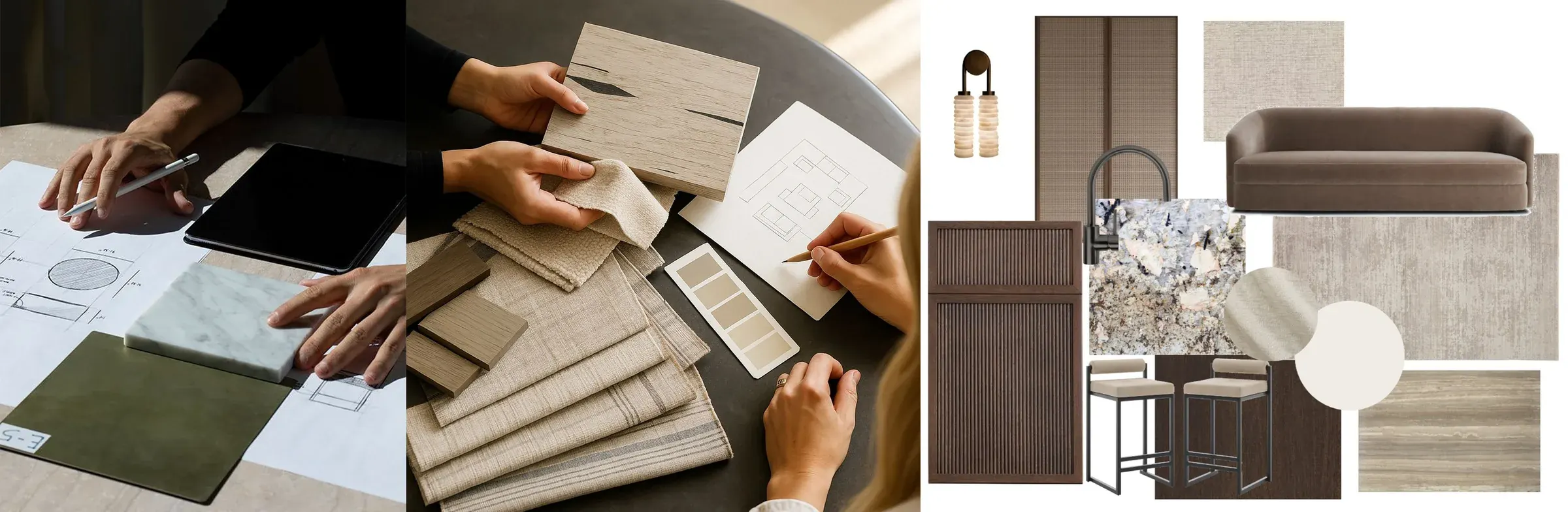
YUESHAN turns design intent into buildable, spec-controlled FF&E.
We connect overseas designers, developers and project teams to the material decisions, technical development, custom manufacturing, quality control and China-side export delivery preparation that carry a rendering into a delivered room.
Six capabilities run end to end — design, specify, source, make, control and deliver — so the approved reference stays connected from the first shop drawing to the packed carton.
Hotel work divides in two ways. A branded property answers to a franchise or management brand standard, so part of the specification is written before the project starts and every departure needs a documented equivalent. An independent hotel writes its own brief: more design freedom, but contract-grade durability, fire performance and maintainability have to be defined by the project team instead of inherited from a brand document. FF&E procurement services have to work in both directions — the hotel furniture and FF&E package route sets out how the scope is separated in each case, and the responsibility section names who owns each decision.
Furnishing within FF&E
Furniture is only one layer of the finished room.
YUESHAN coordinates artwork, sculpture, mirrors, rugs, textiles, decorative lighting, objects and greenery with the approved furniture and interior direction. The scope can combine curated sourcing, custom development, approval references and room coding.
The risk sits between the design file and the delivered room.
Most FF&E problems do not begin with a visibly bad product. They begin with an undefined decision, an untested assumption or a responsibility that no one clearly owns.
A rendering can look complete while production information is missing. A BOQ can appear detailed while suppliers interpret the same words differently. A sample can be approved without a method for controlling the batch. Our role is to find those gaps early, turn them into decisions and keep the approved references connected to purchasing, manufacture, inspection and packing.
01
Renderings lack production specifications
A visual can communicate atmosphere and proportion without defining substrates, finishes, construction, performance or tolerances.
02
BOQs contain vague descriptions
Names such as marble table, leather chair or high-density foam leave too many decisions open to supplier interpretation.
03
Supplier quotations cannot be compared
Two prices may include different structures, material grades, finish systems, hardware, packing and inspection responsibilities.
04
Design intent changes during manufacturing
Small substitutions in scale, profile, colour or detailing can accumulate until the delivered room no longer matches the approved concept.
05
The wrong supplier is selected
A factory may be capable in one product type but poorly matched to the material, complexity, quantity or finish expected by the project.
06
Samples and production do not match
Without a named approval reference, colour, sheen, grain, stitching and comfort can drift between a sample and the batch.
07
Delivery is considered too late
Packing dimensions, room coding, assembly, loading sequence and receiving information affect whether approved products arrive ready for use.
Design · Design development
Make the design buildable without flattening its character.
Design development is the translation layer between the creative concept and manufacturing. It is not a replacement for the interior designer. We read the intended proportion, rhythm, material language and atmosphere, then develop the information factories need to make and price the work responsibly.
Early review also reveals where site interfaces, dimensions, comfort, durability or material availability may affect the original idea. These points are returned as decisions rather than hidden inside a supplier quotation. Use the design-to-production readiness checker to identify which project inputs are still open before requesting cost or sampling.
A quotation should define more than “marble”, “genuine leather” or “high-density foam”. Grade, build-up, thickness, finish, approved range, edge treatment, performance and approval method can all change price and result.
Bad specification
Beige marble tabletop
The supplier must guess whether the stone is natural or engineered, what colour range is acceptable, how thick it is, what finish and edge are required, and whether slab layout needs approval.
Better specification
Natural marble / selected range / 18 mm / honed / sealed / eased edge / dry-layout approval
The requirement gives the quotation, sample review and quality inspection a shared reference. Project-specific structural support and tolerances would be added in the drawing package.
A $600 sofa and a $900 sofa may not be the same product.
The visible outline may match while the internal frame, suspension, foam, textile, seam detail, leg finish, fire-performance requirement, inspection and packing differ. Price can be compared only after those fields are aligned.
$600 / illustrative
Image-based offer
Supplier-selected internal frame
Unstated foam density and layering
Residential textile allowance
Standard stitching and finish
General final inspection
Basic export carton
$900 / illustrative
Defined project offer
Specified reinforced frame and joints
Approved foam build-up and comfort
Contract textile with named performance
Approved seams, profiles and finish sample
In-process and final QC references
Project packing and room coding
The higher price is not automatically better, and the lower price is not automatically wrong. The question is whether each offer meets the same approved requirement.
These prices illustrate scope differences; they are not YUESHAN offers or market benchmarks. To separate a genuine saving from an omitted requirement, follow the FF&E quotation comparison method before using the quote comparison checklist.
FF&E procurement and purchasing begin with a comparable requirement.
China sourcing is not simply searching for factories and collecting prices. A responsible procurement route connects the specification to verified manufacturing capability, makes commercial scope comparable and records what has been accepted.
01
Specification
Define the material, construction, finish, quantity, quality level, packaging and project responsibility that suppliers must price.
02
Supplier capability
Match the item to a manufacturer with the relevant product process, material experience, capacity and quality control.
03
Quotation
Collect price, lead time, inclusions, exclusions, tooling, samples, packing and commercial assumptions in a consistent format.
04
Comparison
Normalise scope and expose differences so the team does not compare a complete offer with a lower but incomplete one.
05
Procurement
Confirm the selected route, approval references, programme, reporting and release conditions before orders move into production.
The goal is not to find the factory with the lowest price. It is to find manufacturing capability that matches the project requirement and makes the remaining risks visible.
Bring the current pricing baseline
Share the BOQ revision, item quantities, drawings, material references, destination and required dates. If quotes already exist, identify their dates, currency, delivery basis and exclusions. Missing information stays an open decision, not an assumed inclusion.
Agree the review deliverables
Define which items need a line-by-line comparison, supplier clarification, alternative specification or sample decision. For each difference, record the proposed resolution, decision owner and revised quotation reference. The review scope and any fees need agreement before work starts.
Before ordering, connect the accepted quotation to its drawing revision, material schedule, sample approvals and packing requirements. Specify who approves changes and how substitutions are repriced. For the step-by-step buyer method, use our procurement guide to normalizing quotations.
Value engineering should protect the design priorities instead of replacing every visible material with the cheapest alternative. We separate the intended effect from the cost driver, then make the visual and performance consequences of each option explicit.
01
Design intent
02
Cost driver
03
Alternative
04
Visual impact
05
Performance impact
06
Saving potential
Illustrative example
Stone-topped bedside table
The design intent is a quiet, monolithic top with a warm light-stone appearance. The main cost drivers may be selected natural slabs, waste from vein matching, edge build-up and protective export packing.
Project-approved sintered stone with a controlled printed range and simplified eased edge.
Decision
The alternative can improve batch consistency and cost predictability, but natural depth, edge character and repair behaviour change. The project team sees those impacts before approving a saving.
Source · Manufacturing & supplier matching
Match FF&E supplier capability to the item, not the supplier name to the project.
We do not publish a supplier directory because the correct route changes with the requirement. A strong upholstery factory is not automatically the right source for stone-integrated casegoods, complex metalwork or a low-quantity prototype.
01
Furniture type
Start with the product process: upholstery, casegoods, joinery, metal, stone, lighting or mixed construction.
02
Material
Identify the specialist processes, finishing systems, suppliers and natural-material controls involved.
03
Complexity
Review curves, interfaces, tolerances, new tooling, handwork, engineering and approval demands.
04
Quantity
Match prototypes, small bespoke runs or repeated hotel batches to realistic factory capacity and attention.
05
Required quality
Define the visible standard, functional performance, documentation and inspection points expected.
06
Factory capability
Select and validate the manufacturing route that can meet the combined technical, programme and commercial brief.
Make · Custom furniture & millwork
Multiple categories, one coordinated FF&E brief.
Custom furniture is developed as part of the interior rather than displayed as a product catalogue. Each category has different manufacturing logic, but shared materials, proportions and finish references still need to work together.
01
Furniture
Beds, benches, consoles and occasional pieces developed as part of the room composition.
02
Seating
Chairs and lounge seating developed for comfort, proportion and repeatable production.
03
Tables
Dining, coffee, side and console tables coordinated across structure, surface material and edge detail.
04
Upholstery
Sofas, lounge chairs, headboards and banquettes with defined frames, foam build-up, textiles and stitching.
05
Casegoods
Bedside tables, desks, consoles, cabinets and vanities coordinated across veneer, lacquer, metal, stone and hardware.
06
Custom millwork
Selected fixed elements, wall panels, screens and built-ins where shop-drawing interfaces and site dimensions are clearly assigned.
07
Decorative lighting
Pendant, table and wall lighting selected and coordinated with the furniture and material direction.
08
Fabricated soft goods
Cushions, bed throws and curtains produced to a defined material and finish specification.
09
Stone
Natural or engineered surfaces selected by appearance, slab range, thickness, edge, reinforcement, sealing and dry-layout needs.
10
Mirrors
Wall, floor and furniture mirrors coordinated for scale, frame, safety and placement.
11
Artwork
Selected and commissioned artwork coordinated with the room's material and colour direction.
12
Selected accessories
Decorative objects and styling pieces that complete the composed space.
13
Metal
Decorative frames, trims and components with specified base metal, fabrication method, surface texture, colour and protection.
Control · Sampling & mock-up
Use the approval level that matches the risk.
Not every item requires every sample stage. The right route depends on repetition, complexity, visual importance, comfort, new construction, supplier familiarity and the cost of discovering a problem after batch production.
01
Colour sample
Useful when the main risk is colour, sheen, stain or paint matching.
02
Material sample
Confirms the actual timber, veneer, stone, textile, leather, metal or glass proposed.
03
Prototype
Tests construction, ergonomics, proportion or a technically unusual detail before repetition.
04
First article
The first completed production item becomes a reference for the remaining batch after review.
05
Mock-up
Combines related items or details to test visual coordination, interfaces and use conditions.
06
One-room approval
For hospitality projects, a complete room can confirm multiple categories before wider production.
A hotel room with repeated joinery, lighting and upholstery may justify a one-room approval. A simple side table in a known finish may need only a material sample and first-article check. Experience is shown by choosing enough validation—not by automatically selling the maximum.
Define the review before making the sample
Identify the item, quantity, drawing revision and decision being tested: colour, comfort, construction or a room interface. Agree who reviews it, which reference is retained and which costs and timing are included. A sample request is not automatically an instruction to manufacture the batch.
Connect approval to production release
Keep the sample ID, accepted revision and open comments together. Assign each correction and record its accepted closure. If a material or process changes, identify the affected scope and obtain the required decision before release. Agree the first-article and batch inspection checkpoints against that baseline.
Quality control follows the product while correction is still possible.
Final inspection is important, but it cannot efficiently correct a concealed frame, the wrong substrate or a material batch already used across production. Our QC route links inspection points to drawings, specifications, approved samples and first articles.
The exact checklist changes by product. Natural materials require range and layout decisions; upholstery needs comfort and seam checks; casegoods need alignment and hardware function; mixed construction needs interface and assembly control. Records are useful only when they name the item, reference, finding and required action. Use the hotel furniture quality-control checklist to structure those inspection gates before release.
Incoming material and approved-reference verification
Frame, white-body and in-process construction inspection
Dimensions, profiles, interfaces and functional clearances
Surface preparation, colour, sheen and finish consistency
Upholstery build-up, comfort, seams, pattern and stitching
Hardware type, alignment, movement and installation
Assembly stability, appearance and product identification
Final visual, dimensional and functional inspection
Packing method, labels, quantities and release records
Multiple supply chains and FF&E logistics become one delivery-ready project package.
Delivery planning starts before the finished goods reach a warehouse. Product dimensions, fragility, assembly condition, room destination and receiving sequence influence packing, carton marks, loading and documentation.
YUESHAN coordinates delivery readiness. We do not describe ourselves as the freight forwarder or a site installation contractor: freight booking, destination customs, unloading, fixing and final local acceptance are handled by the client or appointed local partners. Our responsibility is to make the approved goods identifiable, protected, counted and ready for the agreed handover.
Product-specific protective packing
Item, carton, room and area coding
Multi-supplier quantity reconciliation
Consolidation and loading sequence
Packing lists and export handover documents
Assembly and care information where required
Remote technical clarification for the appointed local team
Exception records before shipment release
The procurement process
Eight steps from project review to export.
The full route turns an approved design into an ordered, manufactured, inspected and delivered project — each step builds on the one before it.
01
Project review
BOQ, drawings, renderings, target budget and schedule establish the starting scope.
02
Design & specification review
Missing information, specification gaps and material decisions are identified early.
03
RFQ & value engineering
Supplier fit, cost drivers and alternatives are compared before pricing.
04
Shop drawings
Dimensions, materials, construction and interfaces become manufacturing information.
05
Sampling & mock-up
Finish samples, furniture samples and model rooms lock the approval reference.
06
Production
Material control and batch consistency keep the approved result repeatable.
07
QC & pre-shipment
Dimensions, finish, function and packing are checked before release.
08
Consolidation & export
Container planning, documentation and delivery coordination complete the handover.
13 / Featured case studies
See the service in a project context.
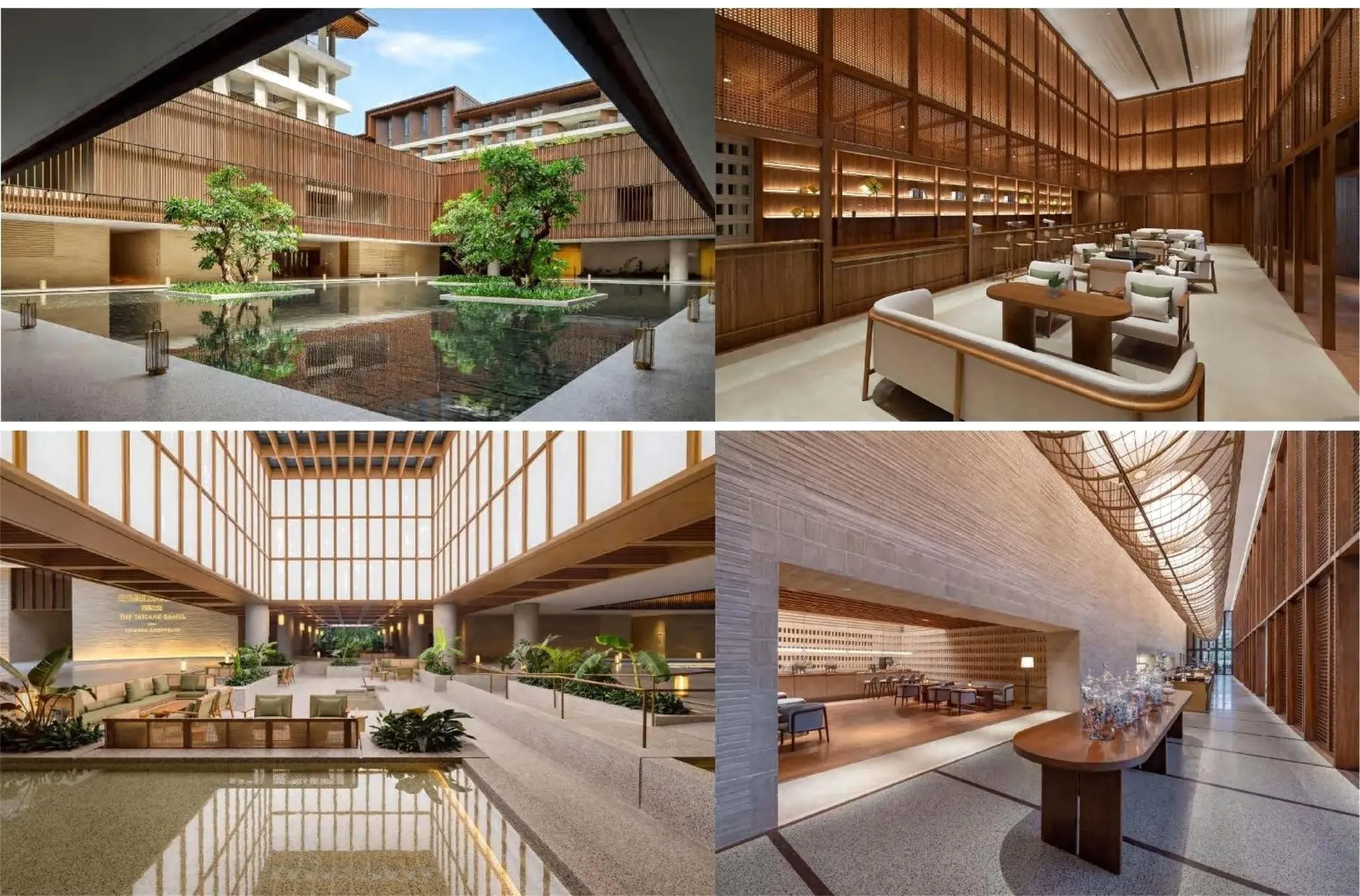
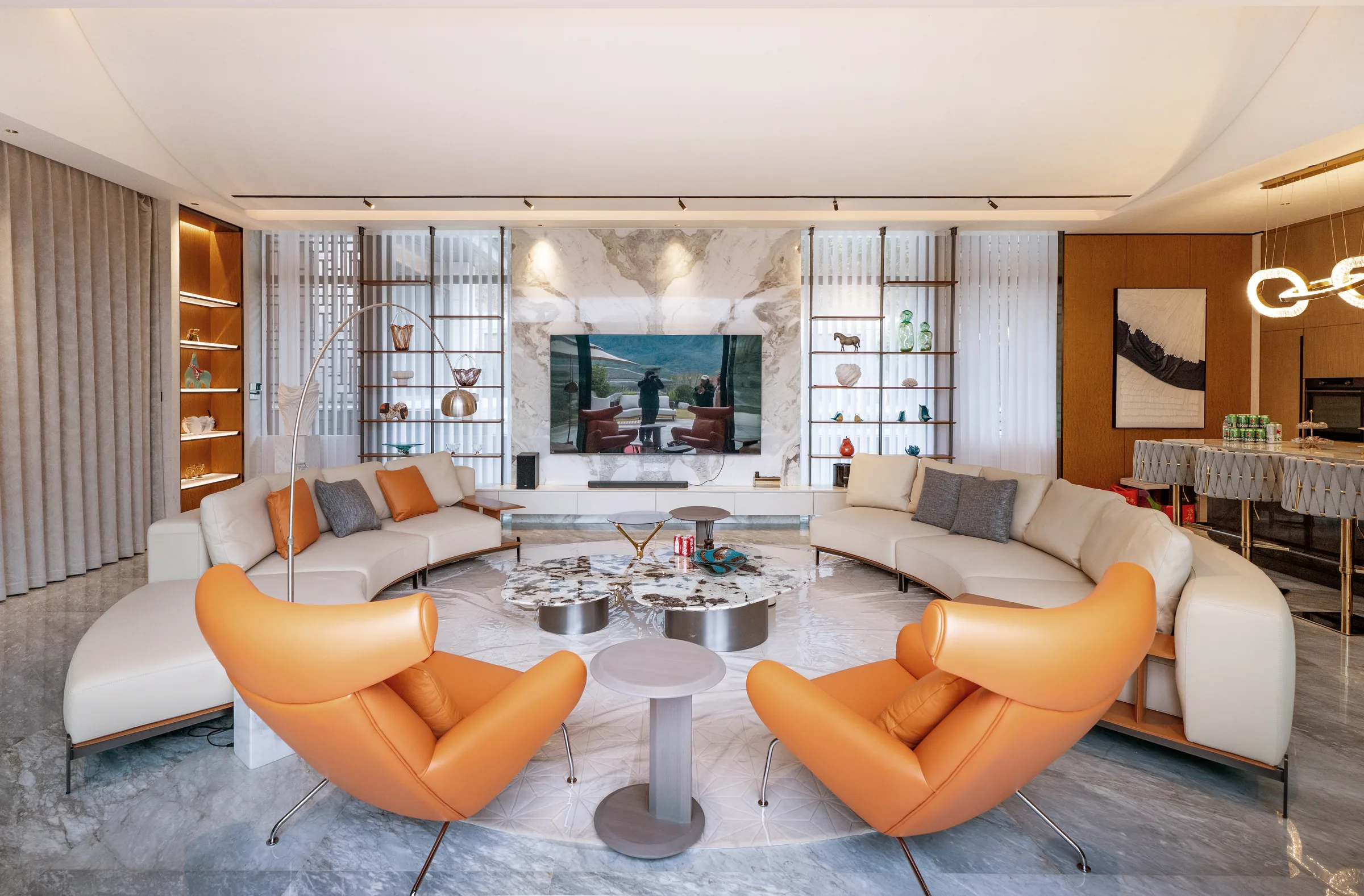
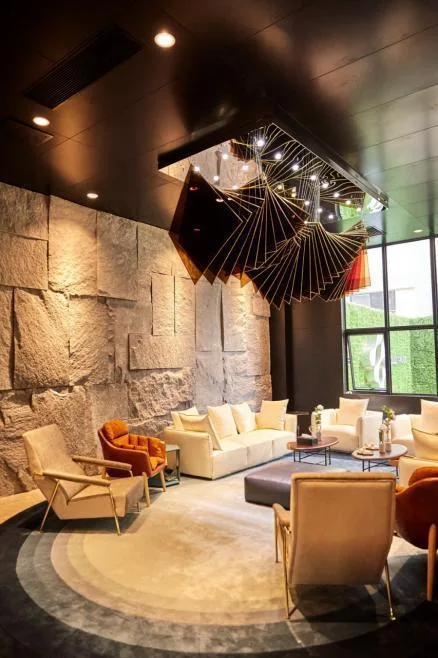
Selected public work shows how hospitality, residential and commercial environments place different demands on material coordination, custom furniture and the wider FF&E composition.
Hospitality · Hainan
Haitang Bay Resort
Furniture placed within timber architecture and wider resort public spaces.
YUESHAN DECO / Tangwan operates as a design-led custom furniture manufacturer, FF&E procurement partner, supplier-network coordinator and interior furnishing design studio. The confirmed operating record includes a 10,000 sqm factory area and cooperation with about 50 specialist factories across the Guangdong furniture and furnishing supply chain.
Our current export project experience covers Europe, North America, Australia, the Middle East and Africa. Custom production is normally planned around a 30–45 day manufacturing allowance after the scope, drawings, materials, samples and production slot are approved. Custom furniture and project-based B2B work are quoted without a minimum order quantity; the accessories and styling side of a package carries a USD 5,000 minimum order value. The standard service position is a one-year warranty from acceptance with lifetime maintenance support, and a complete claim is acknowledged within 24 hours, with exclusions and the assessment route confirmed in the proposal.
Installation labour is not included. YUESHAN supports delivery readiness through item coding, packing information, export handover records and technical clarification; the client or appointed local contractor arranges site unloading, fixing, installation and final local acceptance.
Fire-retardant, abrasion, VOC, environmental or other performance certificates are handled according to project requirements and must match the selected product, material, construction and destination rule.
Source: YUESHAN Custom Furniture Profile — March 7, 2025, pages 2, 5–6, 11–13, 20–24 and 27–39, plus YUESHAN business confirmation on September 9, 2026.
Scope, quotation and approval questions are easier to solve before production begins. The signed proposal and project-specific specification always take priority over this general guidance.
Can you quote from renderings only?
Yes, but an initial price based only on renderings must state its assumptions. We first identify missing dimensions, materials, construction, finish, quantity and performance requirements. Where the information is insufficient for a comparable quotation, we recommend a design-development or specification step before commercial confirmation.
Can you work with our existing BOQ?
Yes. We review the BOQ against drawings and visual references, then highlight vague descriptions, missing quantities, scope overlaps, exclusions and fields that prevent supplier comparison. Your original item codes can be retained so decisions remain traceable across quotation, approval, production and packing.
Can items be sourced from multiple factories?
Potentially. A mixed FF&E package may need different specialist manufacturers. The proposal should identify the selected suppliers, coordination scope, common approval references, programme, quality records, packing information and any consolidation responsibility.
How is colour consistency controlled?
Colour control begins with a named physical sample and a defined material or finish system. Where included in the agreed inspection scope, incoming materials and selected production stages are checked against that reference. Natural variation, lighting conditions, exceptions and the responsible release decision should be recorded.
Do we need a full mock-up?
Not always. The approval level should match repetition, complexity, visibility and risk. A colour chip may be enough for a simple finish; a first article may suit a repeated chair; a prototype may be needed for comfort or structure; and a one-room mock-up is most valuable when many hospitality categories must work together.
Can you propose alternative materials?
Yes. Alternatives are presented through value engineering, with the design intent, cost driver, proposed change, visible effect, performance effect and potential saving considered together. We do not treat a cheaper substitute as equivalent without explaining what changes.
How are suppliers selected?
Supplier matching considers product type, material process, technical complexity, quantity, required quality, programme and documented capability. The objective is not the lowest factory price; it is a manufacturing route that fits the approved requirement with manageable project risk.
How should a sample be connected to production?
The accepted sample should be coded and linked to the specification, supplier and item. Where included in the agreed inspection scope, incoming materials and selected production stages are checked against it. Any proposed change should be recorded for the named decision owner before the affected release.
What is included in delivery support?
Our core role is delivery readiness: product-specific packing, item and room coding, consolidation planning, loading information and export handover records. YUESHAN does not provide site installation labour or present itself as the freight forwarder; freight booking, destination customs, unloading, fixing and final local acceptance are handled by the client or appointed local partners.
When can a reliable final quotation be issued?
A reliable quotation follows a defined scope and specification. Complex custom items may also need drawing clarification or sample decisions. Early budget estimates are possible, but final commercial comparison should happen only when suppliers are pricing the same materials, construction, finishes, quantities and responsibilities.
 YUESHANDECODesign-led custom furniture & FF&E delivery partner in ChinaSubmit a project ↗